

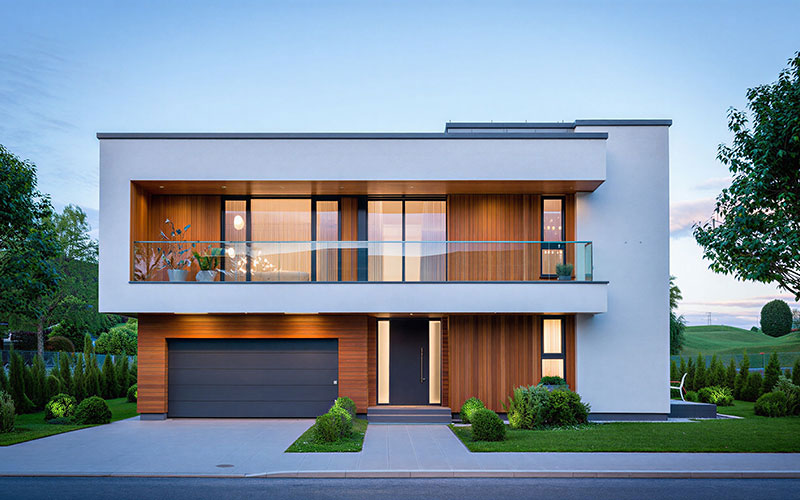
Luxury home content lists tend to focus on the same set of visible amenities: smart home automation, spa bathrooms, wine cellars, home theaters, outdoor kitchens. These features matter, but they’re not what makes a home actually feel luxurious to live in. The real luxury lies in the architectural bones, the mechanical systems you never see, the materials chosen for their aging properties, and how the whole home integrates with the climate and lifestyle of its location.
This guide organizes luxury home features into four categories: the architectural foundation (the bones), invisible quality (systems and materials), lifestyle features (the visible amenities), and coastal California signatures (the regional specifics that distinguish North County coastal homes from luxury elsewhere). Plus an honest take on which features deliver substance versus which are mostly marketing. For broader custom build context, see our custom home builder service page and cost to build a custom home guide.
Four categories of luxury home features
| Category | What it is | Why it matters |
|---|---|---|
| Architectural foundation | The bones, structure, light, and space | Sets the home’s character before any finishes go in |
| Invisible quality | Systems, materials, and craftsmanship you don’t see | Determines how the home performs and ages |
| Lifestyle features | The visible amenities and dedicated rooms | Shapes daily experience and entertaining |
| Coastal California signatures | Climate, light, and lifestyle features specific to the region | Connects the home to its location |
A truly luxurious home is strong in all four. Homes that focus only on lifestyle features (the third category) end up feeling like a hotel suite full of amenities without the underlying quality that makes them last. Homes that focus only on the bones can feel sparse without the lifestyle layer that makes daily use joyful.
Architectural foundation: the bones
The most luxurious feature of any home is its underlying architecture. Generous proportions, excellent natural light, intentional sightlines, and material quality at the structural level all matter more than any single amenity room.
High and varied ceilings.
Tall ceilings throughout the primary living spaces (10–14 ft typical for luxury construction) create immediate spatial generosity. Variation between rooms (lower in bedrooms for intimacy, higher in living areas for drama) creates rhythm. Coffered, beamed, or vaulted treatments in primary spaces add architectural interest beyond flat painted surfaces.
Daylighting design.
Window placement, orientation, and proportion that bring natural light deep into the home throughout the day. South-facing exposure to primary living spaces for winter warmth. East-facing exposure to kitchens and breakfast areas for morning light.
North-facing windows for steady, indirect light in art spaces and offices. West exposure managed with overhangs, shades, or specialty glazing to prevent harsh afternoon glare.
Sight lines and spatial flow.
Long sight lines from the entry through the home to a view, an outdoor space, or a focal feature. Open floor plans that maintain visual connection between primary living, kitchen, and dining. Strategic walls and partial separations that create rooms without breaking the openness.
Specialty entry.
A genuine entry sequence: covered approach, transitional space, threshold that announces arrival rather than dropping you directly into the living room. Custom front doors (8 ft or taller, premium materials, real metalwork hardware) signal what the home is before you step inside.
Stair as architecture.
Open-tread, sculptural staircases as architectural moments. Materials that distinguish themselves (steel and wood, stone treads, custom-millwork railings). Stair design that feels like furniture rather than a building component.
Volume and proportion.
Rooms sized in human-scale relation to use, with intentional volume relationships between spaces. A grand great room that flows into more intimate adjacent spaces. Spatial drama balanced with comfort.
Invisible quality: systems, materials, and craftsmanship
The features homeowners notice most after living in a custom home are usually the ones they couldn’t see during the walk-through. Mechanical, acoustic, and material decisions made during construction set the home’s performance and longevity for decades.
- Premium mechanical systems. Zoned HVAC with variable-speed equipment and humidity control. Heat pump systems sized for actual demand rather than rule-of-thumb. Whole-house ventilation that maintains indoor air quality without constant outdoor air intrusion. Radiant floor heating in bathrooms and primary living spaces (not standard, genuinely luxurious to live with).
- Acoustic isolation. Sound isolation between rooms that goes beyond code minimum. Resilient channel and double-stud construction at primary bedrooms. Sound underlayment under all hard flooring on upper levels. Solid-core interior doors throughout. Acoustic treatment in home theaters, music rooms, and offices. A quiet house is a luxury feature you only notice in its absence.
- Window quality. German-engineered windows with low-U-value glazing, multi-point locking hardware, and proper installation with continuous insulation around frames. Casement and tilt-turn operation rather than basic single-hung. Specialty glazing for sun and noise control where needed.
- Premium insulation. Insulation specifications above code minimum. Continuous insulation outboard of framing eliminates thermal bridging. Closed-cell spray foam in critical areas. Properly air-sealed envelope that minimizes infiltration. These don’t show in photographs but they show in monthly energy bills and indoor comfort year-round.
- Materials that age well. Quarter-sawn white oak floors with multi-coat polyurethane finish, hand-troweled plaster walls in primary spaces, honed natural stone in kitchens and baths (not engineered surfaces that look new for two years then look dated), board-formed concrete or steel-trowel finishes at architectural elements, real metal (brass, bronze, blackened steel) at hardware and fixtures. Materials that gain character with use rather than showing wear.
- Craftsmanship at junctures. The detail at every transition (where wall meets ceiling, where one floor type meets another, where cabinetry meets counter) is where luxury construction distinguishes itself from production construction. Reveal joints, custom transitions, and trim work that disappears into the architecture rather than calling attention to itself.
- Smart wiring and infrastructure for future flexibility. Conduit pathways, structured wiring panels, and built-in low-voltage infrastructure that supports current technology and accommodates future upgrades without opening walls. This is invisible during occupancy but enormously valuable for renovations and upgrades over a 20-year ownership.
Lifestyle features: the visible amenities
This is where most luxury home content focuses, and it’s the easiest category to over-index on. The features below are genuinely valuable when they match lifestyle, but each should be evaluated against actual use rather than included by default.
Gourmet kitchen with serious work setup. Professional-grade range and ventilation (60-inch range minimum for serious cooks). Separate prep sink. Walk-in pantry with butler’s pantry transition to dining. Integrated appliances (paneled refrigerator and dishwasher) for clean lines. Counter run lengths that support actual multi-person cooking. The kitchen is the room most homeowners use most; specifying for real cooking is a high-return investment.
Primary suite as a destination. Bedroom sized for actual furniture (king bed plus seating area minimum, ideally with sitting area separate from sleeping). Walk-through closet with island and ample hanging length, drawer storage, and shoe display. Spa bathroom with separate water closet, freestanding tub, oversized shower with multiple heads, and heated floors. Coffee bar or morning room for early-day routine.
Home office or dedicated work space. Real office, not a converted bedroom. Built-in millwork for storage. Acoustic isolation from primary living. Network drops, good lighting, and proper desk-height integration. A home office that competes with the best workspace you’ve ever had encourages actual work productivity.
Indoor-outdoor living connection. Operable wall systems (sliding glass, accordion doors, lift-and-slide systems) that genuinely disappear when open. Outdoor living space sized and equipped for actual use (proper seating, outdoor kitchen with grill plus prep and refrigeration, fire feature). Covered transitional spaces that work in shoulder seasons. This is the category where coastal North County climate genuinely earns its premium.
Pool and outdoor amenity. Pool sized and shaped for actual swimming (or as architectural water feature). Spa adjacent or integrated. Pool deck materials that handle barefoot use and salt air. Outdoor shower for post-pool rinse. Landscape design that supports the pool aesthetically and provides privacy.
Wine storage. Climate-controlled wine room or cellar for collectors. Smaller-scale glass-fronted wine refrigerator integrated into kitchen or butler’s pantry for occasional collectors. Sized to actual collecting habit rather than aspirational scale.
Home theater or media room. Dedicated theater with proper acoustics, blackout, and tiered seating for cinephiles. Media room that serves daily TV-watching with comfortable seating and integrated equipment for the rest of us. Avoid the trap of building a $100K theater you’ll use four times per year when a $30K media room would serve daily use.
Fitness space. Equipment-appropriate flooring, mirror walls if applicable, audio system, climate control. Adjacent to outdoor space for run-out and stretching. Configured for the kind of fitness you actually do (Peloton room is different from free-weights gym is different from yoga studio).
Guest accommodations. Separate guest suite with private entry where possible. Junior ADU as a guest house for extended-stay visitors. Pool house with bath and changing area for casual use.
Coastal California signatures
A luxury home in coastal North County should reflect its location. These features are signatures of homes that work specifically in this climate and lifestyle.
Indoor-outdoor integration as central design principle. Not just glass doors. Living spaces that genuinely treat outdoor space as part of the home. Covered loggias and porches as primary living rooms in shoulder seasons. Outdoor kitchens that are real kitchens (not just a grill). Pool and spa positioned as architectural focal points from primary interior spaces.
View corridors and privacy together. Sites with views need to capture them deliberately. Sites without views need to create internal courtyards and protected outdoor rooms. Both require thoughtful site design beyond just picking a floor plan.
Salt-air-rated systems and materials. Brushed nickel, powder-coated, or solid brass over polished chrome. Coastal-rated HVAC condensers. Marine-grade exterior fasteners. Glass and metal selections that handle salt spray without rapid corrosion. Specifications that account for the actual climate, not generic coastal-California-as-marketing.
Native and drought-tolerant landscape as luxury. California native plant palettes, mature olives and oaks, decomposed granite paths, rain catchment integrated with irrigation, dramatic specimen plants positioned for sightlines. Lawn-free or minimal-lawn designs that work with water restrictions. Done well, native landscapes feel more sophisticated than imported tropical or European-style plantings.
Light handling for the climate. Deep overhangs at western exposures to prevent harsh afternoon glare. Window awnings or specialty glazing where overhangs aren’t practical. Skylight orientation and shading that brings light in without bringing in heat. Sun shelves and clerestory windows that reflect indirect light into rooms.
Ocean and canyon orientation. Primary living spaces and primary suite oriented to capture the best of what the site offers (ocean view, canyon view, garden view, depending on lot). Lower-priority spaces (utility, guest, garage) positioned to buffer and protect the primary spaces.
California native material palettes. Board-formed concrete, white oak (rather than imported tropical hardwoods), Pacific Northwest cedars at exterior cladding, honed limestone or natural plaster at interior accents, blackened steel and aged brass at hardware. Materials that look like they belong in California rather than transplanted from Tuscany, Manhattan, or Aspen.
Substance vs. fluff: an honest take
Some “luxury features” are genuinely high-impact. Others are marketing.
Worth specifying:
- Premium mechanical systems (zoned HVAC, radiant floors, whole-house ventilation)
- Quality windows with proper installation
- Acoustic isolation between rooms
- Real materials that age well (oak, stone, brass, plaster)
- Indoor-outdoor integration done with serious operable systems
- Built-in technology infrastructure for future flexibility
- Custom millwork at thresholds, transitions, and architectural elements
- Lighting design (real designed lighting, not just recessed cans)
Mostly marketing:
- Shower TVs and TVs in unusual places
- Gold-plated fixtures (real brass or bronze is luxurious; gold plating is not)
- Branded high-status appliances when they’re not actually better than alternatives
- Bedroom-as-spa with twenty fixtures you’ll never use
- Closet systems with more drawers than you have clothes
- Smart home automation that’s not actually automated (manually controlled lighting via app isn’t an upgrade over a wall switch)
- Custom anything that doesn’t serve actual use
- Anything specified to impress visitors rather than to serve daily life
The test for any luxury feature: would you specify it again if no one would ever see your home? If yes, it’s substance. If no, it’s marketing.
How to choose features for your custom build
Three filters for evaluating which features to include.
- Filter 1: Actual lifestyle. What’s your real daily routine? What do you actually do at home? A wine cellar is luxurious for someone who collects wine and entertains regularly; for someone else it’s storage space. A home gym is essential for someone who works out daily at home; useless for someone who prefers a studio class. Start with how you actually live, not how you imagine living.
- Filter 2: Long-term value. Will this feature matter in 5 years? In 15? Some features (architectural foundation, mechanical quality, material durability) age into their value. Others (highly specific theme rooms, trendy finishes, tech that ages quickly) age out of it. Bias toward features with long-term value.
- Filter 3: Coastal California fit. Does this feature take advantage of the location, or fight against it? An indoor pool fights coastal California weather. An outdoor pool with proper integration takes advantage of it. A heavily curtained interior fights coastal light. An open, daylight-rich interior takes advantage of it. Specify features that the location supports.
Frequently asked questions
What features are most important in a luxury home?
The architectural foundation (ceiling heights, daylighting, sightlines, proportion) and the invisible quality (mechanical systems, materials, craftsmanship) matter most for daily living experience. Visible amenities (kitchen, primary suite, outdoor living, wine room, theater) matter for entertaining and specific lifestyle uses. Start with the foundation; add amenities that match actual lifestyle.
What makes a home actually feel luxurious?
Spatial generosity, natural light, material quality, acoustic comfort, and how the indoor and outdoor spaces integrate. A home with these qualities feels luxurious even without a single dedicated amenity room.
A home that has every dedicated amenity room but lacks these qualities feels less luxurious than the basics suggest.
Are smart home features really worth it?
Real automation (lights, climate, security, blinds that respond to time and conditions) is genuinely useful. Manually controlled smart features (lights you control via phone app instead of wall switch) add complexity without much benefit. Specify smart features that automate, not features that just digitize manual control.
What luxury features add the most resale value in coastal North County?
In order of typical resale impact: gourmet kitchen, primary suite quality, outdoor living and pool, view-capture in primary living spaces, additional bedrooms with en-suite baths. Quality of architectural bones matters but is harder to attribute to specific dollar value at sale.
What luxury features are most regretted by homeowners?
Highly specific theme rooms (bowling alley, indoor basketball court) that don’t get used. Custom features that don’t match later life-stage needs. Trendy finishes (high-gloss surfaces, very specific color palettes) that age quickly. Over-built outdoor kitchens for homeowners who don’t actually cook outdoors.
How do I decide which luxury features to include?
Filter through three questions: Does this feature match how I actually live? Will it still matter in 10–15 years? Does it work with coastal North County climate and lifestyle, or against it? Features that pass all three are worth including. Features that fail one or more should be reconsidered.
What’s the difference between luxury and expensive?
Expensive describes price. Luxury describes how a home feels to live in. Many expensive homes don’t feel particularly luxurious because they’ve spent on features without underlying architectural and material quality. Many merely expensive features add cost without adding luxury experience.
Should I work with an architect for a luxury home?
For luxury-tier custom homes (typically $900+ per square foot construction cost in coastal North County), architect-led design is standard. The architect’s value is in resolving the architectural foundation (proportion, daylighting, sightlines, spatial flow) that separates true luxury from expensive-but-generic construction.
For mid-market custom builds, design-build firms with experienced in-house designers can deliver similar quality at lower design fees.