

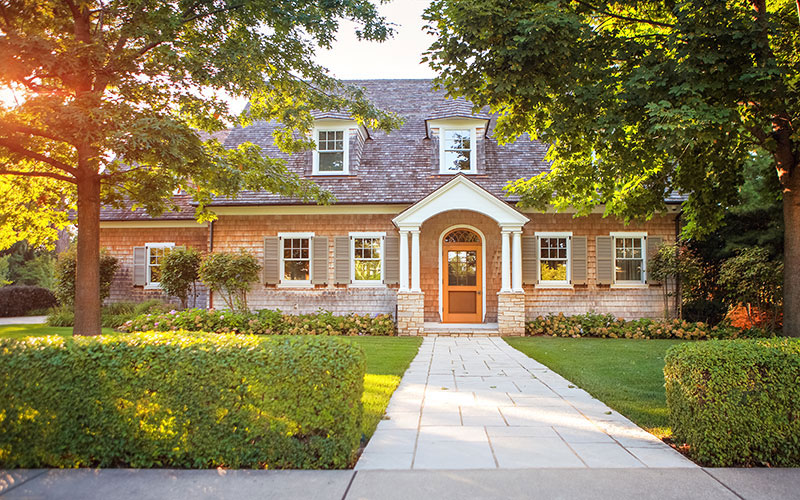
A custom home in coastal North County San Diego costs $400 per square foot at the production-custom end and clears $1,500 per square foot at the luxury end. That’s just the build. Land in the same market runs $500,000 to $3,000,000-plus for a buildable lot. Soft costs (architect, engineering, permits, construction loan carry, temporary housing) add another 15–25 percent on top of construction. Total project budgets for new custom homes in North County typically run $1.5 million to $8 million-plus when all in.
This guide breaks down what custom builds actually cost in three tiers, what the total project picture looks like beyond construction, and the coastal North County regulatory and site factors that drive significant cost variance. For broader planning context, see our home renovation checklist, or to explore renovation as an alternative path, see our whole house renovation cost guide.
Three custom build tiers
The phrase “custom home” covers projects that differ by an order of magnitude in cost. Three tiers describe the market.
| Tier | Process | Per sq ft (North County) | Build cost (3,000 sf home) |
|---|---|---|---|
| Production custom | Builder catalog with customization options | $400–$600 | $1.2M–$1.8M |
| Mid-market custom | Design-build (designer and builder together) | $600–$900 | $1.8M–$2.7M |
| Luxury custom | Architect-led, separate builder, premium finishes | $900–$1,500 | $2.7M–$4.5M |
| Ultra-luxury custom | Coastal estate, custom millwork, premium everything | $1,500–$3,000+ | $4.5M–$9M+ |
These ranges assume coastal North County 2026 market pricing. Inland markets run 15–25 percent lower. Oceanfront and Covenant community projects run 20–40 percent higher because of approval timelines, finish-level expectations, and site access constraints.
Production custom.
You’re working from a builder’s catalog of floor plans with selectable options and finishes. Layout adjustments are limited but real. Selections (cabinets, countertops, flooring, fixtures) come from curated options the builder has experience with. The builder typically handles design under their own license or with an in-house designer. Fastest path from concept to break-ground (often 2–4 months for design and permitting) because the plans have been built before.
Mid-market custom.
Design-build process where the builder and a designer work together from concept to completion. More layout and material flexibility than production custom. Selections still curated but broader. Builder retains design accountability. Most common path for homeowners who want a genuinely custom result without separate architect engagement. Design phase typically 4–8 months.
Luxury custom.
Architect-led design with a separate general contractor. The architect designs to the homeowner’s specifications without builder constraints, then the GC builds to architect’s documents. Highest flexibility, highest design fees (typically 8–15 percent of construction cost), longest design phase (6–18 months). Required when the home has unusual design requirements, specific aesthetic vision, or premium finish levels.
Ultra-luxury custom.
Same architect-led process at a different scale: premium materials throughout, custom millwork, specialty finishes (book-matched stone, sourced antique elements, custom-fabricated steel and glass), bespoke kitchen and bath, full smart-home integration, often pool/spa/outdoor kitchen as part of the scope. Per-square-foot cost reflects materials and labor intensity rather than building square footage alone.
The total project view
Build cost is what most SERP content addresses. Total project cost is what you actually pay. In coastal North County, the total often runs 60–80 percent more than the construction number alone when you account for land, soft costs, and carrying costs.
| Cost category | Typical share of total project | Notes |
|---|---|---|
| Land (buildable lot) | 25–50% | $500K–$3M+ in coastal North County; varies wildly by location |
| Hard construction cost | 40–55% | What “cost to build” usually refers to |
| Architect and design fees | 5–15% | 5–8% for design-build, 8–15% for architect-led luxury |
| Engineering (structural, civil, geotech, MEP) | 2–5% | Higher on hillside and bluff lots |
| Permits and impact fees | 1–3% | Coastal zone permits run higher |
| Construction loan interest (12–18 month build) | 3–6% | Depends on loan rate and build duration |
| Builder’s risk insurance | 0.5–1% | Required during construction |
| Temporary housing (if needed) | 1–3% | $5K–$10K/month coastal North County rental |
| Contingency (10–20% of hard cost) | 4–11% | Hold reserve against unknowns |
A homeowner with a $1.5M construction budget should plan total project spend of approximately $2.5M–$3.5M depending on land cost and finish level.
Skipping the total view leads to underfunded projects that either downscale mid-build or run out of contingency at the wrong time.
What drives cost variance within a tier
Two custom homes in the same tier can finish $500K–$1M apart. The variance comes from a small number of decisions and site conditions.
- Lot characteristics. Flat, accessible lots near existing utilities cost meaningfully less to build on than constrained sites. Hillside lots add foundation cost ($30K–$100K+) and require step-down or split-level designs. Bluff-edge lots require geotechnical investigation ($10K–$30K), specialized foundation engineering, and Coastal Commission review. Narrow lots constrain floor plate options. Each of these can add 10–25 percent to construction cost.
- Square footage. Custom build per-square-foot cost typically declines with size (fixed kitchen and bath costs spread across more floor area), but total cost rises. A 4,500 sq ft home at $700 psf costs $3.15M; a 3,000 sq ft home at $750 psf costs $2.25M. The right size depends on use case, not per-foot economics.
- Number of stories. Two-story homes are typically 10–15 percent cheaper per square foot than equivalent single-story homes because foundation and roof costs spread across more floor area. Three-story homes have additional structural and code requirements (sprinklers in many jurisdictions, stair design requirements) that erode some of this advantage.
- Foundation type. Slab on grade is the cheapest foundation option but commits you to no crawlspace plumbing access and slab plumbing penalties for future modifications. Raised foundation (crawl space) costs 10–15 percent more but offers significant flexibility advantages. Basement foundations are rare in coastal California due to soil and water table conditions; when present, they add $100K–$300K but provide significant additional usable space.
- Roof complexity. A simple roof line (single hip or gable) costs significantly less than a complex multi-plane roof with valleys, dormers, and intersections. Custom homes with architecturally complex roofs can add $50K–$150K versus simpler equivalents.
- Window package. High-performance windows (low-U-value, casement or operable, premium hardware) cost 3–5x basic builder-grade windows. Large glass openings (sliding doors, picture windows) add per-square-foot premium versus equivalent wall area. Window selection on a luxury custom can easily run $100K–$300K.
- Finish level. This is where the tier ranges spread widest. Production-tier finishes are curated mid-range. Luxury-tier finishes include custom cabinets, premium stone, designer fixtures, integrated appliances. Material costs for the kitchen alone can range from $40K (production tier) to $250K+ (ultra-luxury) for the same kitchen footprint.
- Mechanical and electrical scope. Standard HVAC, plumbing, and electrical run baseline cost. Premium mechanical (zoned HVAC, geothermal, radiant floor heating), smart-home wiring throughout, solar with battery backup, EV charging, water filtration, and similar systems add $50K–$300K+.
- Outdoor scope. Pool, spa, outdoor kitchen, hardscape, landscape design, irrigation, lighting. Custom homes in coastal North County typically allocate $150K–$800K to outdoor scope. Project budgets that don’t include this end up underfunded for outdoor work post-completion.
Coastal North County regulatory and site drivers
Several California and coastal-specific factors significantly affect custom home cost and timeline beyond what national guides cover.
Coastal Commission review.
Properties in the coastal zone (Del Mar, parts of Encinitas, parts of Carlsbad, parts of Solana Beach) typically require Coastal Development Permit review through the California Coastal Commission or local Local Coastal Program. CDP review adds 60–120 days to schedule, requires coastal-compliant plans (typically 15–30 percent design fee uplift), and may require setbacks, height limits, or design adjustments that affect buildable floor area.
Coastal Hazards review.
Bluff-edge properties require geological hazards investigation and may have additional setback requirements from bluff edges. Investigation runs $15K–$40K. Foundation design for bluff-adjacent properties may require specialty engineering at $20K–$60K additional.
HOA Art Jury review.
Covenant communities (Rancho Santa Fe) require Art Jury approval for all new construction. Approval runs 30–90 days on top of city plan check. Some communities have approved materials lists that constrain finish selections. Approval fees and design fee uplift for Covenant compliance typically add $20K–$80K.
Title 24 Climate Zone 7 requirements.
Coastal North County is Climate Zone 7, with specific Title 24 prescriptive requirements for insulation, glazing, HVAC efficiency, and HERS testing. All-electric construction is now required or strongly incentivized in many North County jurisdictions. Compliance costs are embedded in modern construction but specifying a designer familiar with Zone 7 prevents costly redesigns.
Plan check duration.
Coastal jurisdictions running fully custom builds typically take 12–24 weeks for plan check approval, longer with revisions. Build timelines should plan for 4–8 weeks of plan check on the early end and prepare for extension.
Geotechnical requirements.
Most North County jurisdictions require geotechnical reports for new construction. Standard residential geotech runs $5K–$10K; hillside, bluff, or known-unstable-soil properties run $15K–$40K or more. Soil conditions discovered during geotech (expansive soils, fill, slope instability) can require foundation upgrades costing $30K–$200K.
Prevailing wage districts.
Some special districts and public-adjacent projects require prevailing wage rates for trades, which add 20–35 percent to labor costs. Most private residential work is exempt, but verify if your project touches any public-funded infrastructure.
Permit and impact fees.
New construction in San Diego County typically triggers $20K–$80K in permits and impact fees depending on home size and jurisdiction. These are separate from soft costs and typically capitalized into the construction loan.
Custom build vs. buy and renovate
Many homeowners considering custom builds are also weighing the alternative of buying a comparable existing high-end home and renovating to taste. The decision math is real, and it favors different paths in different scenarios.
Custom build typically wins when:
- You have a specific aesthetic or functional vision that existing inventory can’t deliver
- Lot characteristics (view, orientation, privacy, lot size) are more important than the dwelling itself
- You’re willing to wait 18–36 months for the project to complete
- You have stable housing during the build period
- Total project budget is comfortable at $2.5M+ and you’re building in the $700/sf+ tier
Buy and renovate typically wins when:
- A comparable existing home with sound bones is available in your target neighborhood
- You need to move within 6–12 months
- Renovation can deliver 80 percent of your vision at 50–60 percent of new build cost
- The existing home’s price point and reno cost combined are below custom build total
The transaction cost reality. Buying a $2M home and selling it later carries 8–12 percent transaction costs ($160K–$240K). Custom builds avoid these on the buy side but introduce construction risk and 18–36 month delays. Worth running both numbers for your specific situation rather than assuming one path is universally better.
For comparison context, see our whole house renovation cost guide which covers gut renovation as an alternative path.
Timeline reality
A typical custom build schedule:
- Land acquisition. 2–12 months depending on market and specificity of requirements.
- Design phase. 2–4 months production custom, 4–8 months mid-market custom, 6–18 months luxury custom (architect-led).
- Permit review. 8–16 weeks city plan check, plus 30–90 days HOA Art Jury if Covenant community, plus 60–120 days Coastal Commission if coastal zone.
- Construction. 10–14 months production and mid-market custom, 14–24 months luxury custom, 24–36 months ultra-luxury.
- Total project time. 18–36 months from initial concept to occupancy. Plan for the longer end if your project involves coastal review or complex site.
Custom builds also typically have schedule risk that production homes don’t: weather delays affecting weatherproofing work, custom material lead times (cabinets often 16–24 weeks, custom millwork 20–32 weeks, specialty stone or imported finishes 12–20 weeks), and the natural pace of architect-led design refinement during construction.
What you’ll get back at resale
Custom homes in coastal North County typically appraise close to construction cost when built well in established neighborhoods. ROI varies based on:
- Neighborhood comparable sales. If your custom home is the highest-priced property in the neighborhood, you’ll appraise below cost because comps don’t support the value. Building $1,500/sf in a neighborhood where existing homes sell at $800/sf produces immediate negative equity. Verify your build target aligns with neighborhood ceiling.
- Design aesthetic. Custom homes with broadly appealing design retain value better than highly personal designs. Mid-century modern, traditional, contemporary, and farmhouse styles transact well in coastal North County. Highly idiosyncratic designs may not.
- Time horizon. Custom builds amortize their premium over years of occupancy. A $3.5M home you live in for 15 years has very different economics than the same home you sell after 3 years.
The “live-in” return often exceeds the resale return: a custom home you love delivers daily value that doesn’t show up in appraisal math. For long-tenure ownership, this is the bigger consideration.
How to control your custom build budget
- Lock the design before construction. Design changes during construction are the single biggest budget-buster in custom builds. Pay for thorough design documentation upfront. 10–15 percent of total budget spent on design typically saves 20–30 percent of total budget in avoided change orders.
- Validate land buildability before purchase. A lot with surprise geotech issues, restrictive setbacks, or buried easements can add $100K–$500K to the project. Spend $10K–$15K on pre-purchase due diligence (geotech, survey, title review, jurisdictional inquiry) rather than discovering issues post-close.
- Choose the right tier honestly. Trying to build mid-market custom on a production-custom budget produces value-engineered compromises throughout. Either commit to the tier or build a smaller home at the tier you want. The latter usually delivers better daily experience.
- Get realistic about timelines. Custom builds take 18–36 months. Plan housing, schooling, work, and financing for the long end. Projects that depend on aggressive timelines almost always experience the disappointment of reality plus the cost of expediting.
- Hold real contingency. 15–20 percent contingency on hard construction cost, not 5 percent. Custom builds surface unknowns that production builds don’t. The contingency exists to absorb them without scope cuts.
- Use written allowances and detailed selections. Custom cabinets at $X per linear foot installed, stone counters at $Y per square foot installed, plumbing fixtures at $Z per location. Every line itemized. No verbal site-walk agreements. Selections finalized before construction begins on the relevant trade.
For complex custom builds, our custom home builder service handles design-build through architect-led projects across coastal North County.
Frequently asked questions
How much does it cost to build a custom home in San Diego County?
In coastal North County: production custom $400–$600 per square foot, mid-market custom $600–$900 per square foot, luxury custom $900–$1,500+ per square foot. A 3,000 square foot home runs $1.2M–$4.5M in construction cost depending on tier. Land, soft costs, and carrying costs typically add 60–80 percent to the construction number for total project cost.
How long does it take to build a custom home?
Total project time from concept to occupancy: 18–24 months for production and mid-market custom, 24–36 months for luxury custom, longer for ultra-luxury. This includes design (2–18 months), permit review (3–7 months including coastal and HOA review where applicable), and construction (10–24 months).
Is it cheaper to build a custom home or buy an existing one?
Depends on the comparison. Buying a comparable existing high-end home in coastal North County and renovating typically costs 40–60 percent of building new on a comparable lot. Custom build wins when location, lot characteristics, and specific vision matter more than total cost. Existing home plus renovation wins when timelines, budget, or specific neighborhood inventory favor the available option.
What’s included in the cost per square foot for a custom home?
Per-square-foot figures typically include hard construction costs: foundation, framing, roofing, exterior, all interior finishes, mechanical and electrical systems, plumbing, and standard fixtures. They typically exclude: land, soft costs (architect, engineering, permits), construction loan interest, builder’s risk insurance, temporary housing, contingency, and outdoor scope (pool, hardscape, landscape). Plan for total project cost of 1.6–1.8x the per-square-foot construction figure.
What’s the minimum budget for a custom home in coastal North County?
For permitted construction in this market, plan for a minimum project budget of approximately $1.5M total ($500K–$800K lot plus $700K–$1M construction plus soft costs and contingency). Below this budget, you’re typically better served by buying an existing home and renovating, or by building inland where land costs are lower.
Do I need an architect to build a custom home?
For production custom, no. The builder typically handles design under their own license or with an in-house designer. For mid-market custom, the design-build firm typically includes a designer (registered architect or experienced designer). For luxury custom, yes. Architect-led design is the standard for the luxury tier and is typically required by lenders and insurance for projects above $3M construction cost.
What’s the construction loan reality for a custom build?
Construction loans cover the build in disbursed phases tied to construction milestones (foundation, framing, dried-in, mechanical rough-in, drywall, finishes, completion). Interest accrues on disbursed amounts only. Typical construction loan rate runs 1–2 percent above conventional mortgage rates. Loans convert to permanent mortgage at completion. Most lenders require 20–30 percent down on land plus construction cost combined. Reserve account for contingency is typically required.
How much contingency should I hold for a custom build?
15–20 percent of hard construction cost for production and mid-market custom, 20–25 percent for luxury and ultra-luxury custom where unknowns are more numerous. Contingency covers concealed conditions, design changes the homeowner approves, code-required upgrades, and material price escalation during the build. Holding less than this risks scope cuts mid-build or running out of money at completion.