

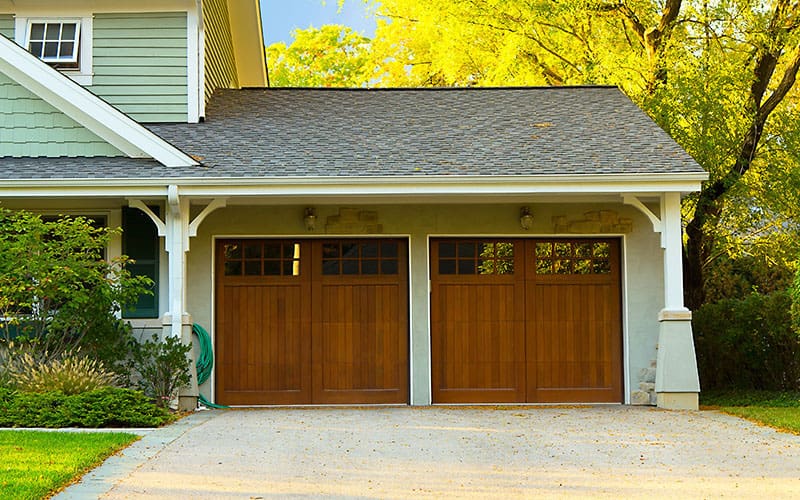
National cost guides for garage conversion get California badly wrong. The headline ranges they cite ($6,000 to $25,000, with most projects at $10,000 to $15,000) reflect unpermitted finishing work in low-cost markets, not permitted conversion in coastal California.
A real permitted garage conversion in coastal North County starts at $15,000 for a basic habitable room and runs to $200,000 or more for a full ADU conversion with kitchen, bath, and separate entrance.
This guide breaks down what permitted garage conversion actually costs in North County San Diego, the difference between converting to additional living space versus converting to an ADU, and the California-specific code requirements that drive the budget. For broader planning context, see our home renovation checklist.
Two different projects: living space vs. ADU
Before discussing cost, the most important distinction: a garage conversion can be either a living-space conversion (the garage becomes additional rooms that are part of the primary home) or an ADU conversion (the garage becomes a separate, self-contained dwelling unit). These are different projects at fundamentally different costs.
| Conversion type | What it is | North County cost range |
|---|---|---|
| Habitable room (no plumbing) | Garage becomes bedroom, office, family room, or gym. Permitted, but no kitchen or bath added. | $15,000–$35,000 (one-car), $25,000–$55,000 (two-car) |
| Habitable room with bath | Garage becomes bedroom suite with attached bath. Permitted. Plumbing added. | $30,000–$60,000 |
| Permitted ADU conversion | Garage becomes self-contained dwelling unit with kitchen, bath, separate entrance, and meets state ADU code. | $100,000–$200,000 |
| Above-garage ADU (new construction over existing garage) | New construction second-story ADU built above the existing garage. | $250,000–$450,000 |
The cost jump from habitable room to ADU is large because an ADU requires complete dwelling infrastructure: separate electric service (often separate meter under SDGE requirements), separate water service, full kitchen, full bath, dedicated HVAC, dedicated water heater, fire separation from primary home, parking compliance (waived for many ADU conversions under California state law), and Title 24 compliance for new dwellings rather than additions.
Learn more: How Much Does It Cost to Build an ADU?
Why national cost guides understate California
Three California-specific factors push costs above national averages:
- Title 24 energy code. California’s Title 24 requires insulation levels (R-15 walls, R-30 ceiling, R-19 raised floor over crawlspace, R-10 perimeter slab insulation in some climate zones), efficient HVAC, low-U-value windows, and HERS testing for many conversions. Compliance adds $5,000–$15,000 to a conversion that would skip these requirements in a less-restrictive state.
- Permit costs. California ADU and habitable space permits average $10–$12 per square foot. A 400 sq ft garage conversion runs $4,000–$5,000 in permit fees alone before any impact fees. Habitable-room conversions (not ADU) typically skip impact fees but still incur full permit costs.
- Labor and material costs. San Diego County labor rates run 20–35 percent above national averages depending on trade. Material costs are similarly elevated. Specialty trades (HVAC, plumbing, electrical) book out 4–8 weeks in advance through most of 2026, which can extend project timelines and increase contractor general conditions.
Where the money goes
For a permitted habitable-room conversion (one-car garage, no bath addition):
| Category | Share of budget |
|---|---|
| Floor system (vapor barrier, insulation, subfloor, flooring) | 12–18% |
| Walls (insulation, drywall, finishes) | 15–20% |
| Ceiling (insulation, drywall, finishes) | 8–12% |
| Garage door replacement (wall + window) | 8–12% |
| HVAC (mini-split or extension from primary home) | 12–18% |
| Electrical (panel upgrade, new circuits, fixtures) | 10–15% |
| Egress windows | 5–10% |
| Permits, design, contingency | 10–15% |
Adding a bathroom shifts the allocation toward plumbing and tile, typically 20–30 percent of total budget for the bath portion alone. ADU conversion shifts further toward kitchen, separate utility connections, and full dwelling-unit infrastructure.
What drives cost variance
- Floor system. Garage slabs sit lower than primary home floors by 4–6 inches typically, and they’re not insulated or vapor-protected. Bringing the floor up to habitable code requires either a raised subfloor system (sleepers, insulation, plywood) or grinding and sealing the slab plus adding rigid foam under flooring. Floor system alone: $3,000–$8,000.
- Ceiling height. California code requires 7.5 ft minimum ceiling height for habitable space. Many garages are built to 8 ft, leaving little room for ceiling insulation and finished ceiling. Some garages run 9 ft+, which gives more room to work. Pre-1980 garages sometimes fall below 7.5 ft and require either floor lowering or roof raising to comply. Verify before designing.
- Garage door replacement. Replacing the garage door with an exterior wall and window runs $2,000–$8,000 depending on opening size, finish to match primary home, and window quality. Specifying a code-compliant egress window in this opening typically meets emergency egress requirements for one habitable room.
- HVAC. Garages have none. Adding habitable HVAC requires either a heat pump mini-split (typically $5,000–$8,000 installed for a one-car space), extending ductwork from the primary home (often $4,000–$8,000), or installing a dedicated forced-air system for the converted space ($8,000–$15,000). Heat pump mini-splits are usually the right answer for a single converted room.
- Electrical service upgrade. Older homes with 100A service often need a panel upgrade before adding habitable load. Conversion alone may need a sub-panel installed in the converted space. Panel upgrade plus new circuits: $3,000–$6,000 depending on existing condition.
- Egress windows. Bedrooms (and any room used for sleeping) require code-compliant emergency egress windows: minimum opening dimensions of 20 inches wide by 24 inches tall, minimum 5.7 sq ft openable area, sill no higher than 44 inches above floor. Cutting an egress opening through an existing concrete or framed garage wall: $2,000–$5,000 per window including framing, header, and the window itself.
- Bath plumbing. Adding a bath to a garage conversion requires running supply and drain lines to the new space. If the garage is adjacent to existing primary-home plumbing, $8,000–$15,000 is typical. If the run is longer or requires concrete cutting in the garage slab, $15,000–$30,000. Slab cutting requires GPR scanning if post-tensioned (verify, $800–$1,500).
- Kitchen plumbing and electrical. Adding a full kitchen to convert to ADU adds $15,000–$30,000 in plumbing, electrical (separate circuits for appliances), and rough-in. This is the main cost step between habitable-room and ADU conversion.
- Fire separation. If the garage is attached to the primary home and the conversion preserves any garage function (e.g., converting half a two-car garage and keeping half for parking), code requires 1-hour fire-rated separation between the garage and the habitable space. Type X drywall, fire-rated doors, and proper sealing add $2,000–$5,000.
- Sound separation. Converted garages attached to primary home benefit from sound isolation that meets dwelling-unit standards. Staggered-stud or double-stud walls at shared partitions, sound underlayment, and solid-core doors at entrances add $2,000–$5,000 to a basic conversion and meaningfully improve livability.
- Parking replacement. California state ADU law waives parking replacement requirements for many garage-to-ADU conversions under AB 68 and subsequent legislation. Habitable-space conversions that aren’t ADUs may still trigger parking replacement requirements depending on local ordinance. Replacement parking (typically a paved pad or carport) runs $3,000–$8,000.
Permitted vs. unpermitted
Unpermitted “conversions” exist and they’re cheap. Drywall, flooring, paint, maybe a window cut, $5,000–$15,000 in total. They’re also not legitimate.
Unpermitted converted space:
- Cannot be counted in home square footage at resale
- Cannot be appraised by a lender for refinance or sale
- Is not covered by standard homeowner’s insurance
- May trigger fines or forced removal if discovered by code enforcement
- Typically must be brought up to code (retroactive permits) before sale
The cost savings of unpermitted work usually disappear at sale because the buyer’s lender won’t lend on the unpermitted square footage and the seller either drops price or pays to retroactively permit. Retroactive permitting is often more expensive than permitting up front because it requires opening walls for inspection and may require code upgrades from current standards rather than the standards at the time work was done.
The decision is real: $20,000 in cost savings now versus a $30,000–$50,000 retroactive cleanup at sale, plus the practical issues of not being able to insure or appraise the space in between. The math doesn’t favor unpermitted work in almost any scenario.
Coastal North County considerations
- Title 24 climate zone requirements. Coastal North County is California Climate Zone 7, which has specific Title 24 prescriptive requirements for insulation, glazing, and HVAC efficiency. These differ from inland and high-altitude requirements. Specify a designer familiar with Zone 7 requirements.
- Salt-air corrosion. Specify materials with coastal warranty coverage for HVAC condensers, exterior fixtures, and metal finishes. Standard interior-rated equipment fails 30–50 percent faster within a mile of the coast.
- HOA approval. Covenant communities require Art Jury approval for any visible exterior change, including the wall-and-window that replaces the garage door. Approval runs 30–90 days on top of city plan check. Some communities have additional restrictions on converting garages, particularly if the conversion eliminates the only enclosed parking on the lot.
- Coastal zone properties. Properties in the Coastal Commission jurisdiction may trigger CDP review for changes to the building envelope, including garage door removal. CDP review adds 60–120 days and 15–30 percent to design fees. Interior conversions that preserve the garage door typically don’t trigger CDP review; converting the garage door to wall-and-window typically does.
- Older home considerations. Pre-1979 garages may have asbestos in flooring or wall materials, lead paint, or wiring that requires complete replacement. Add three to seven days for testing and one to three weeks for abatement if needed.
What you’ll get back at resale
National data suggests garage conversions deliver roughly 80 percent ROI when done with proper permits. The real value depends on whether the conversion adds square footage that the local market values:
- Adding a permitted bedroom: Generally adds value commensurate with the bedroom’s contribution to the home’s square-foot price. A converted 400 sq ft bedroom in a $1.2M coastal home running $800/sq ft adds approximately $80,000–$160,000 in appraisable value at sale. Net of a $40,000 conversion cost, that’s 2–4x return.
- Adding a permitted home office or family room: Returns less than a bedroom because the market doesn’t value the change in functional designation as much. Approximately 70–80 percent ROI.
- Adding a permitted bath: Improves home’s bath count for listing classification, which can have outsized effect on time-on-market. 70–90 percent direct ROI plus listing-tier benefits.
- ADU conversion: Returns vary based on whether the buyer values the rental income. Investor buyers may pay close to dollar-for-dollar for ADU value; primary-residence buyers may discount it.
The home’s market matters. A garage conversion that adds a fourth bedroom to a 3-bedroom home in a family neighborhood returns better than the same conversion in a market where 3-bedroom homes already dominate the comp set.
How to control your budget
- Don’t lose the garage entirely without considering the impact. If you’re in a market where garage parking is rare and homes with garages command a premium, eliminating the only enclosed parking on the lot can reduce home value. Consider whether converting half the garage (in two-car garage scenarios) preserves parking value while still adding habitable space.
- Choose habitable room over ADU when the use case allows. A bedroom or family room conversion at $30,000 versus an ADU conversion at $150,000 is a 5x cost difference. ADU is only justified when separate-dwelling functionality is genuinely needed.
- Keep plumbing minimal or aligned with existing primary-home plumbing. Adding a bath far from existing plumbing can double the bath portion of the budget. If the garage shares a wall with the primary home’s bathroom or kitchen, plumbing costs drop significantly.
- Run electrical capacity analysis upfront. A $500 capacity study before signing a contract prevents a $5,000 surprise panel upgrade discovered mid-project.
- Use a written allowance schedule. Flooring at $X per square foot installed, windows at $Y per location, HVAC equipment at $Z installed. Every line itemized. Every scope change priced in writing.
Frequently asked questions
How much does it cost to convert a garage to a living space in San Diego County?
In coastal North County: $15,000–$35,000 for a permitted one-car habitable room without plumbing, $25,000–$55,000 for a two-car. Add $15,000–$30,000 for a bath. Permitted ADU conversion runs $100,000–$200,000.
National cost guides showing $6,000–$25,000 for “garage conversion” significantly understate California permitted-work costs.
Do I need permits to convert my garage?
Yes, for any conversion that changes the use from storage to habitable space. Unpermitted conversions can’t be counted as square footage at sale, aren’t insurable, and may require retroactive permitting at higher cost. Confirm with your local building department before assuming a project doesn’t need permits.
How long does a garage conversion take?
Permitted habitable-room conversion: 6–12 weeks active construction, plus 4–8 weeks for permit review. Conversion with bath: 8–14 weeks plus permitting. ADU conversion: 12–20 weeks plus 8–12 weeks for permit review. Add 30–90 days for HOA approval in Covenant communities, 60–120 days for CDP review on coastal-zone properties if the garage door is being removed.
What’s the difference between a garage conversion and an ADU?
A garage conversion can be either: a habitable room added to the primary home (no kitchen, no separate entrance, no separate utilities), or an ADU (separate dwelling unit with kitchen, bath, entrance, and ADU-code compliance). The ADU version is 3–5x more expensive because of the full dwelling-unit infrastructure required.
Can I leave the garage door in place?
Yes, but it changes the project economics and may have appraisal implications. A garage with insulated walls, finished interior, and the garage door preserved is sometimes called a “finished garage” rather than a conversion.
It can serve some habitable uses (workshop, gym, occasional guest space) but typically isn’t counted in habitable square footage at appraisal because it lacks the egress, climate control, and structural elements required for true habitable space.
What’s the cheapest way to convert a garage legally?
Permitted habitable-room conversion of a one-car garage with no plumbing addition, electrical run extended from existing primary-home service, mini-split HVAC, basic finishes.
North County typical range: $15,000–$25,000. Anything lower than this either skips required code work (and is unpermitted) or skips required quality (and won’t last or feel like real living space).
Does a garage conversion add value to my home?
Yes when permitted, typically at 70–90 percent ROI depending on what the conversion becomes. A permitted bedroom usually delivers better resale return than a permitted office or family room because the market values bedroom count specifically. The actual value depends on whether your local market values the added square footage at all.
Will I need to replace garage parking?
Under California AB 68 and subsequent ADU legislation, parking replacement is waived for many garage-to-ADU conversions. Habitable-space conversions that aren’t ADUs may still trigger parking replacement requirements depending on local ordinance. Some HOAs require parking replacement even when state law doesn’t. Confirm before designing.