

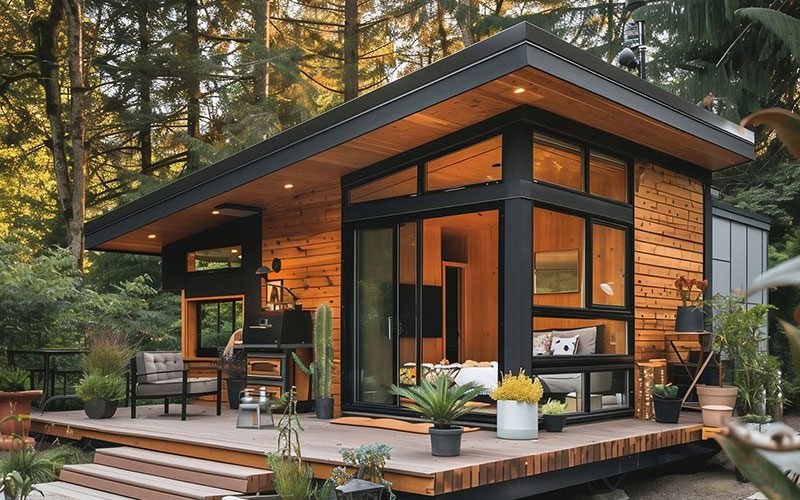
An accessory dwelling unit in coastal North County San Diego costs anywhere from $75,000 for a junior ADU carved out of existing space to $550,000 or more for a detached new-construction unit. The spread is real, and the right number depends on three decisions: what type of ADU, how big, and whether you’re approaching it as a standalone project or as part of broader home improvements.
This guide breaks down what each ADU type actually costs in the North County market, the decision framework for choosing ADU versus an addition versus a remodel, and the ongoing ownership costs that don’t show up in build-cost numbers. For broader planning context, see our home additions and ADUs service page.
What you’ll spend by ADU type
| ADU type | Typical size | Cost range | Cost per sq ft |
|---|---|---|---|
| Junior ADU (within existing home, ≤500 sf) | 200–500 sf | $75,000–$175,000 | $150–$350 |
| Garage conversion | 250–500 sf | $100,000–$200,000 | $200–$400 |
| Attached ADU (new construction) | 400–800 sf | $200,000–$400,000 | $300–$500 |
| Detached ADU (new construction) | 500–1,200 sf | $300,000–$550,000 | $350–$600 |
| Above-garage ADU | 500–900 sf | $250,000–$450,000 | $400–$600 |
These ranges assume coastal North County pricing. Inland markets run 10–15 percent lower; coastal-zone properties with Coastal Commission review and Covenant communities run 15–25 percent higher.
- Junior ADU. Carved out of the existing home, typically by converting a bedroom or bonus room. Under 500 sq ft by definition. Must share kitchen access with the primary home (efficiency kitchen permitted but not separate full kitchen). Lowest cost because it uses existing structure, foundation, and roof.
- Garage conversion. Converting an existing attached or detached garage into a habitable ADU. Requires insulation, HVAC, electrical upgrade, plumbing rough-in for kitchen and bath, code-compliant egress, and fire separation from any remaining garage space. The shell exists; the conversion is everything inside it plus utilities.
- Attached ADU. New construction sharing one or more walls with the primary home. Less expensive per square foot than detached because foundation and roof can tie into existing structure. Constrained by primary home layout and lot configuration.
- Detached ADU. Standalone new-construction unit. Most expensive per square foot because everything (foundation, framing, roof, exterior walls, utility connections) is new and freestanding. Most flexible in design because it isn’t constrained by the primary home.
- Above-garage ADU. Built over an existing or new garage. Higher per-square-foot cost because of the structural work required to support a second story over a garage opening. Often the right answer when lot size is constrained and yard space is at a premium.
Where the money goes
ADU budget allocation differs from primary home renovation because everything is new and the unit is essentially a small house with all major systems.
| Category | Share of ADU budget |
|---|---|
| Foundation, framing, exterior shell | 25–35% |
| Plumbing, electrical, HVAC systems | 15–20% |
| Kitchen and bath fit-out | 15–20% |
| Interior finishes (flooring, paint, doors) | 10–15% |
| Site work (grading, utility connections, hardscape) | 5–10% |
| Solar system (California Title 24 requirement) | 3–5% |
| Permits, design, contingency | 8–12% |
Site work is the most variable line. A flat, accessible lot near existing utilities runs at the low end. A constrained lot requiring tree removal, drainage work, or long utility runs from the main service can add $20,000–$60,000 just to site preparation.
Learn more: ADU Renovation: The Feasibility, Permitting, and Inspection Reality Homeowners Miss
California-specific costs that don’t show up in national averages
ADU cost guides written for the national market understate California costs significantly because of state-specific requirements that don’t apply elsewhere.
Title 24 energy code compliance.
California’s Title 24 requires HERS testing on all new ADUs, all-electric construction in many jurisdictions, and minimum insulation and glazing standards above national norms. Adds $5,000–$12,000 to the total compared to a code-minimum build in a less-restrictive state.
Solar mandate.
New ADUs in most California jurisdictions require an on-site solar system sized to offset the unit’s electrical usage. Typical system runs $12,000–$18,000 installed, scaled to ADU size and climate zone.
Separate electric meter (SDGE territory).
SDGE now requires separate metering on most new-construction ADUs, even when the unit shares ownership with the primary home. Meter installation, panel upgrade if required, and trenching for the new service run approximately $10,500. Older homes with 100-amp service often need a panel upgrade ($3,000–$5,500) to support the ADU load.
Permit and impact fees.
California permits average $10–$12 per square foot for ADUs. A 750-square-foot ADU runs $7,500–$9,000 in permit fees alone. Impact fees (sewer connection, school district, traffic) are waived for ADUs under 750 sq ft under SB 13. ADUs 750 sq ft or larger trigger impact fees that must be proportional to ADU size relative to the primary home.
Mello-Roos and special district fees.
Properties in Mello-Roos districts (parts of newer North County developments) may have special assessment fees that apply to the ADU’s added value. Confirm before designing.
Construction cost inflation.
California residential construction costs rose roughly 44 percent from 2021 to 2026 according to the California Construction Cost Index. ADU prices have risen with the broader market and are unlikely to come down meaningfully in 2026.
Should you build an ADU? The decision framework
Before locking into an ADU, run the comparison against the two other paths homeowners often consider: a primary home addition, or a remodel of existing space. The right answer depends on what you actually need.
Build an ADU when:
- You need a fully separate living unit (rental income, long-term family housing, multigenerational arrangement)
- You want the option of separate sale or lease in the future (AB 1033 condo conversion is available in California)
- Your primary home doesn’t have room to expand for the needed function
- You’re comfortable with the higher per-square-foot cost of standalone construction
- The lot can accommodate the ADU under setback and FAR rules
Build a primary home addition when:
- The need is for more space within the existing household (more bedrooms, a primary suite, a larger kitchen-and-family-room)
- You want the addition to count toward primary home square footage for resale
- The math on per-square-foot cost favors addition over standalone build
- You don’t need a separate kitchen, entrance, or address
Remodel existing space when:
- The need is for better-functioning space rather than more space
- The existing layout has unused or underused areas (formal living room, oversized bedroom, finished basement)
- You can reach 80 percent of your goals without adding square footage at all
- The cost of remodeling per gained-functionality is lower than building new
The cost comparison example.
Building a 600 sq ft detached ADU costs roughly $400,000 in coastal North County. Adding a 600 sq ft addition to the primary home (assuming straightforward foundation and roof tie-in) runs $300,000–$400,000 depending on complexity. Remodeling 600 sq ft of existing primary home for better function runs $80,000–$200,000.
The ADU costs more because you’re building a complete house in miniature; the addition is cheaper per square foot because it shares structure with the primary home; the remodel is cheapest because you’re using existing structure entirely.
The income angle.
An ADU’s economic case often relies on rental income. North County market rent for a 600 sq ft ADU runs roughly $2,200–$3,000 per month depending on location and finish level. At $2,500 average monthly rent, gross annual income is $30,000.
After property tax reassessment, insurance increase, and maintenance reserves, net income is closer to $20,000–$24,000. Simple payback on a $400,000 ADU is 16–20 years before any appreciation factor. The math works as a long-term investment, less so as a quick-return play.
What ownership actually costs over time
Build cost is what you pay once. Total cost of ownership is what you pay every year for the next 30 years. The TCO is what determines whether the ADU is a good financial decision.
- Property tax reassessment. California Proposition 13 caps general property tax increases for existing structures, but new construction (including ADUs) is assessed at full value upon completion. A $400,000 ADU triggers approximately $4,000–$4,800 in additional annual property tax in San Diego County.
- Insurance. Adding an ADU typically increases homeowner’s insurance by $400–$1,200 annually depending on size, type, and whether it’s rented. Landlord coverage if rented adds incrementally.
- Maintenance. Plan for 1–2 percent of the ADU’s build cost annually for ongoing maintenance and capital reserves. On a $400,000 ADU, that’s $4,000–$8,000 annually. Roof, exterior, HVAC, and water heater all have replacement cycles that should be reserved against.
- Utilities (if not separately metered or if you’re paying them). Even with a separate meter, the primary home may share water and sewer service. Confirm allocation arrangements upfront.
- Vacancy and tenant turnover. If the ADU is a rental, plan for 1 month of vacancy annually plus turnover costs (cleaning, painting, minor repairs) every 1–3 years.
- The five-year all-in number. A $400,000 detached ADU in coastal North County, used as a rental, costs approximately $30,000–$45,000 annually in financing, taxes, insurance, maintenance, and reserves. Against $30,000 gross rent, net cash flow is roughly $0–$5,000 in the first five years before appreciation. Most ADUs become genuinely cash-flow-positive in years 5–10 as rents rise and the financing is paid down.
Coastal North County considerations
- Coastal Commission review. ADUs in the coastal zone (Del Mar, parts of Encinitas, parts of Carlsbad) may trigger Coastal Development Permit review for envelope changes. CDP review adds 60–120 days and 15–30 percent to design fees.
- HOA approval timelines. Covenant communities (Rancho Santa Fe) require Art Jury approval for visible exterior changes. Approval runs 30–90 days on top of city plan check. Some communities have additional ADU-specific restrictions beyond California state law.
- Setback and FAR constraints. California state ADU law preempts many local restrictions, but setback minimums (4 feet from side and rear property lines for detached ADUs) and floor-area ratio rules still apply. Verify lot eligibility before designing.
- Hillside and bluff lots. Bluff-edge properties have additional setback and geotechnical requirements that can constrain ADU placement and increase foundation costs. Engineering and geotechnical work adds $10,000–$30,000 to the design phase.
- Salt-air corrosion. Specify coastal-rated HVAC equipment, exterior fixtures, and finishes. Standard interior-rated equipment fails 30–50 percent faster within a mile of the coast.
- Septic vs. sewer. Properties on septic systems may need to upgrade or expand septic capacity to accommodate the ADU. Adds $5,000–$20,000 if required.
Learn more: ADU Floor Plans: How to Choose the Right One
Permitting and timeline reality
A reasonable ADU schedule:
- Feasibility and design. 2–4 months for site analysis, preliminary design, and design development.
- Permit review. 4–8 weeks in most North County jurisdictions, longer if revisions are needed or if the project is in the coastal zone.
- Construction. 4–8 months active construction depending on type. Junior ADU and garage conversion fall at the shorter end; detached new construction falls at the longer end.
- Total project time. 9–18 months from initial concept to certificate of occupancy.
Add 60–120 days for Coastal Commission review on coastal-zone envelope changes. Add 30–90 days for HOA approval in Covenant communities. Add 2–6 weeks for any 2026 trade availability constraints (concrete, framing, and specialty trades are tighter than usual in San Diego County).
How to control your ADU budget
- Choose the lowest-cost ADU type that meets your actual needs. Junior ADU at $150,000 versus detached at $450,000 is a 3x cost difference. If the function can be met by carving out existing space, the math is dramatically better. The temptation to build “the right way” with a detached new-construction unit costs hundreds of thousands of dollars relative to creative alternatives.
- Use pre-approved plans where available. Many North County jurisdictions offer pre-approved ADU plan sets that cut permit time and design fees. Pre-approved plans can reduce design and permitting cost by 40–60 percent versus fully custom design.
- Site selection matters more than you think. An ADU site near existing utilities, on flat ground, with vehicle access for materials and equipment, costs significantly less than a hillside site requiring long utility runs and crane mobilization. If you have multiple potential locations on the lot, the cheapest one to build often differs significantly from the most aesthetically appealing one.
- Combine with other home improvements when possible. If you’re already renovating the primary home, adding the ADU to the same project amortizes mobilization, permit, and design costs. The marginal cost of the ADU drops 10–15 percent versus running it as a standalone project.
- Build under 750 sq ft if rental income isn’t the primary goal. Units under 750 sq ft skip impact fees under SB 13. The cost savings are real (often $10,000–$25,000) and the size limit isn’t restrictive for most use cases other than full rental.
- Get a written allowance schedule. Cabinets at $X per linear foot installed, tile at $Y per square foot, flooring at $Z per square foot. Every line itemized. ADU builds are particularly vulnerable to scope creep because the smaller scale makes upgrades feel less consequential individually. They add up.
Frequently asked questions
How much does it cost to build an ADU in San Diego County?
In coastal North County: junior ADU $75,000–$175,000, garage conversion $100,000–$200,000, attached new construction $200,000–$400,000, detached new construction $300,000–$550,000, above-garage $250,000–$450,000. Inland is 10–15 percent lower; coastal-zone and Covenant communities 15–25 percent higher.
How long does it take to build an ADU?
Total project time from initial concept to certificate of occupancy is typically 9–18 months. Junior ADU and garage conversion run shorter; detached new construction runs longer. Add 60–120 days for Coastal Commission review on coastal-zone envelope changes. Add 30–90 days for HOA approval in Covenant communities.
What’s the cheapest type of ADU to build?
Junior ADU carved out of existing space within the primary home, at $75,000–$175,000 depending on scope. Garage conversion is the next cheapest at $100,000–$200,000. Both use existing structure (foundation, framing, roof) so the cost is concentrated in the interior fit-out and utility connections rather than the full house build.
Is an ADU a good investment?
It depends on use case and time horizon. As a rental, North County ADUs typically generate $2,200–$3,000 monthly with simple payback of 16–20 years before appreciation.
As multigenerational housing or family use, the financial return is supplemented by avoided rent or assisted-living costs. As a flip play, the math rarely works because ADU build cost is high and resale value increase is typically lower than build cost. Long-term ownership is where the math is strongest.
Should I build an ADU or an addition?
If you need a fully separate unit with its own kitchen, bath, and entrance (for rental or long-term separate-household use), ADU is the right answer. If you need more space within the same household and don’t need separate utilities or entry, an addition is typically 20–30 percent cheaper per square foot and counts toward primary home square footage for resale.
Do I need a separate electric meter for my ADU?
In SDGE territory, yes, for new-construction ADUs. Cost is approximately $10,500 including meter installation and panel upgrades if required. Garage conversions and junior ADUs are sometimes exempt depending on jurisdiction; confirm during design.
What permits do I need for an ADU?
Building permit, plumbing permit, electrical permit, mechanical permit at minimum. Some jurisdictions require separate solar and grading permits. California permits average $10–$12 per square foot, so a 750 sq ft ADU runs $7,500–$9,000 in permits before any impact fees. Impact fees are waived for ADUs under 750 sq ft under SB 13.
Can I sell my ADU separately from the primary home?
Yes, under AB 1033 in California, ADUs can be condo-mapped and sold separately from the primary home. Condo mapping process costs $30,000–$50,000 in survey, mapping, and legal fees and takes 6–12 months. Eligibility varies by jurisdiction; not all cities have opted in to AB 1033 yet. Confirm before relying on this option in your financial planning.
What’s the property tax impact of building an ADU?
The ADU is assessed at full market value upon completion. The primary home retains its Proposition 13 protected basis. A $400,000 ADU triggers approximately $4,000–$4,800 in additional annual property tax in San Diego County. Plan this into your TCO analysis.