

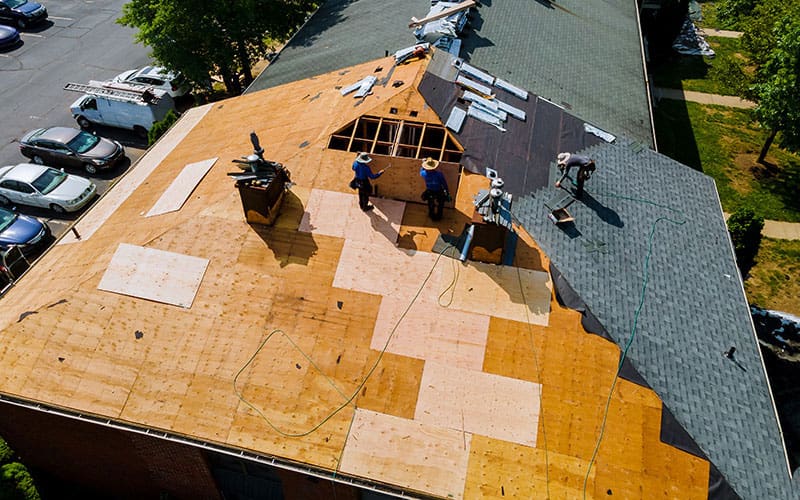
A whole house renovation can cost $50,000 or $1,500,000, and the difference isn’t finishes. It’s scope. Most homeowners researching this question are confused about which scope they’re actually in, which is why the cost ranges they find online vary so widely they aren’t useful. Before you can budget the project, you have to define it.
This guide breaks down the four scope tiers a “whole house renovation” can mean, what each costs in coastal North County San Diego, and the framing decisions that move the budget more than fixture selections do: phased versus all-at-once, live-in versus move-out, and the harder question of whether to renovate at all or sell and buy a different home. For broader planning context, see our home renovation checklist.
The four scopes
| Scope tier | What it includes | Cost range (typical 2,000 sq ft home) | Cost per sq ft |
|---|---|---|---|
| Cosmetic refresh | Paint throughout, flooring replacement, light fixture updates, hardware swaps, possibly cabinet refacing. No structural changes. | $50,000–$150,000 | $25–$75 |
| Mid-range remodel | Cosmetic plus kitchen and bath remodels, some flooring relocations, updated electrical and plumbing fixtures, new HVAC if needed. | $150,000–$400,000 | $75–$200 |
| Full gut renovation | Down to studs throughout. New plumbing, electrical, HVAC, insulation. New kitchen, baths, flooring, finishes. Often new windows. | $400,000–$900,000 | $200–$450 |
| Gut + addition | Full gut plus expanding the home’s footprint or adding a story. Foundation work, framing, exterior, roof tie-in. | $600,000–$1,500,000+ | $300–$600+ |
These ranges assume coastal North County San Diego market pricing. Inland markets run 10–20 percent lower; the Covenant communities and oceanfront zones often run 20–40 percent higher because of approval timelines, finish-level expectations, and access constraints.
- Cosmetic refresh. You’re updating the visible parts of every room without touching what’s behind the walls. Done well, this is the highest-ROI tier because most of the spend goes to surfaces buyers and you actually see. Done poorly, it’s lipstick on systems that will fail within five years.
- Mid-range remodel. You’re combining cosmetic work with a kitchen and bath project (or two) and updating any failing systems. This is the most common whole-house scope because it addresses functional pain points without taking the home out of commission entirely.
- Full gut renovation. You’re replacing everything, often because the existing systems are at end-of-life or the layout is fundamentally wrong. The home is uninhabitable during construction. This tier is justified when the underlying structure is sound but everything inside has to change.
- Gut + addition. You’re combining a gut renovation with footprint expansion. This is often a primary suite addition, an ADU, a second story, or a kitchen-and-family-room expansion off the back. It’s the most expensive scope and also where the resale-value math gets the most interesting because you’re changing the home’s listing classification.
Where the money goes
Budget allocation shifts as scope deepens. A cosmetic refresh is mostly finishes. A gut renovation is mostly systems and labor. Knowing where the money goes at your scope helps you spot bid line items that are out of pattern.
| Category | Cosmetic refresh | Mid-range remodel | Full gut renovation | Gut + addition |
|---|---|---|---|---|
| Surface finishes (paint, flooring, fixtures) | 50–60% | 30–40% | 15–20% | 10–15% |
| Kitchen and bath scope | 10–20% | 25–35% | 20–30% | 15–25% |
| Plumbing, electrical, HVAC systems | 5–10% | 10–15% | 20–30% | 15–25% |
| Structural (framing, foundation, roof) | <5% | 5–10% | 10–15% | 25–35% |
| Labor (general contractor, trades) | 25–35% | 30–40% | 30–40% | 30–40% |
| Permits, design, contingency | 5–10% | 8–12% | 10–15% | 10–15% |
These categories overlap (labor is embedded in every other line). The point is that as you move deeper into scope, the share spent on visible surfaces drops and the share spent on systems and structure rises.
By the time you’re at gut renovation, more than half the budget goes to things you’ll never see.
The phasing decision
Most whole-house renovation budgets get framed as a single number. The actual decision is whether to spend that number all at once or in phases over several years. Each approach has real cost implications.
All-at-once. One contract, one mobilization, one permit cycle, one design pass. The cheapest path on a per-square-foot basis because fixed costs amortize across the full scope. Typical premium over a hypothetical “perfect phasing” is zero. Disadvantage: requires the full budget upfront (or financed) and typically requires moving out.
Phased over 2–4 years. Multiple contracts, multiple mobilizations, multiple permit cycles. Each phase carries its own setup costs (general conditions, dumpsters, port-a-potties, contractor administrative overhead) that don’t go down proportionally with smaller scope. Typical premium over all-at-once: 15–25 percent. Advantages: spreads cash flow, lets you live in the home, lets you adjust later phases based on how earlier ones went. Disadvantages: longer total disruption, design coordination across phases is harder, materials and labor pricing changes between phases.
The math example.
A $400,000 mid-range whole-house remodel done all-at-once costs $400,000. The same scope phased into four $100,000 projects over four years costs $470,000–$500,000 because each phase carries its own mobilization. You’re paying $70,000–$100,000 for the privilege of staying in the home.
When phasing makes sense:
- The home is largely livable now and the renovations are quality-of-life rather than urgent
- You don’t have the full budget available and don’t want to finance it
- You want to learn from earlier phases before committing later ones
- You can’t move out for family, work, or school reasons
When all-at-once makes sense:
- You have access to the full budget through cash, financing, or sale of another asset
- The home has systems issues that can’t be addressed piecemeal
- You can move out without major hardship
- You want the project finished within a year
Live-in versus move-out
If you’re doing the project all-at-once, the next decision is whether to live in the home during construction or move out. The math here is less obvious than it looks.
- Living in the home. No rental cost. But trades work 30–50 percent slower because they have to protect occupied spaces, work in shifts, restore power and water nightly, and coordinate around your schedule. A 6-month project becomes 8–10 months. The contractor’s general conditions (the daily overhead of running the project) extend with the schedule, which can add $20,000–$50,000 to the total.
- Moving out. Rental cost for 6–12 months. In coastal North County, expect $5,000–$10,000+ monthly for a comparable home. So $30,000–$120,000 in rent. But the project finishes 30–40 percent faster, contractor general conditions are lower, and the trades can do better work without occupied-space constraints.
- The break-even. For mid-range and gut renovations, moving out usually wins on total cost when you account for project speed and quality. The exceptions: smaller cosmetic projects (under 4 months) where the rent burden dominates, families with strong school-zone constraints, and homes with separable spaces where you can live in one wing while the other is gutted.
- Hidden cost of living through it. The cost that doesn’t show up in spreadsheets is the toll on the family. Eight to twelve months of dust, noise, restricted access to your own kitchen, and trade workers in your home from 7 AM to 5 PM is genuinely hard. Couples who think they can handle it often can’t. Plan for the financial number plus the personal one.
Renovate or sell and buy?
Many homeowners researching whole-house renovation cost are at the decision point of whether to renovate or just move to a different home. The math in coastal North County is different from national averages because transaction costs are high and inventory is tight.
The transaction cost of moving.
Selling and buying a comparable upgraded home in coastal North County typically runs 8–12 percent of the home’s value in commissions, transfer taxes, escrow fees, and moving costs. On a $1.2 million home, that’s $96,000–$144,000 of pure transaction cost before any home upgrade is purchased.
Where renovation usually wins.
When the home’s location, lot, and bones are fundamentally good and the issues are addressable through renovation. School zone, view, lot size, and neighborhood are not things you can renovate into a different home. If you have those things and need updated systems and finishes, renovating is usually the better dollar-for-dollar move.
Where moving usually wins.
When the home’s fundamental constraints can’t be renovated away. Bad floor plan that can’t be reworked due to load-bearing walls or roof structure. Lot that can’t accommodate the addition you actually need. Neighborhood that’s trending the wrong direction. Schools you don’t want.
The hybrid.
Renovate now to a level that improves daily life and resale value, sell in 5–10 years, and use the appreciation plus equity to buy the long-term home then. This is often the right answer for younger families who don’t yet know what they’ll need long-term.
What actually drives cost variance
Within any given scope, two whole-house renovations can finish $100,000–$300,000 apart. The variance comes from a small number of decisions and conditions.
- Original construction era. Pre-1980 homes typically need full electrical service replacement (knob-and-tube or undersized panels), full plumbing replacement (galvanized supply or cast iron drains), and asbestos and lead testing before demolition. Add $30,000–$80,000 for a typical 2,000 sq ft home. Post-2000 homes need much less of this.
- Foundation type. Slab homes cost more to renovate at the gut level because plumbing changes require concrete cutting and patching. Crawlspace and raised-foundation homes are 15–25 percent cheaper to gut-renovate because trades can work from below.
- Roof age and structure. A whole-house renovation often surfaces roof issues. Replacing a roof during the renovation (good idea while scaffolding is up) adds $20,000–$50,000. If the home needs structural work to support a second-story addition or expanded openings, that’s another $30,000–$100,000.
- HVAC scope. New ductwork, new equipment, new zoning typically runs $25,000–$60,000 in a gut renovation. Mini-split conversions can run higher but eliminate ductwork in tight spaces.
- Window replacement. Whole-house window replacement adds $25,000–$80,000 depending on count and quality. Doing this during a gut is significantly cheaper than retrofitting later.
- Coastal Commission review. Any envelope expansion in coastal zones (Del Mar, parts of Encinitas, parts of Carlsbad) may trigger Coastal Development Permit review. Add 60–120 days and 15–30 percent design fee uplift for coastal-compliant plans.
- HOA approval. Covenant communities (Rancho Santa Fe) require Art Jury review for visible exterior changes. Approval runs 30–90 days on top of city plan check. Plan accordingly.
- Site access. Hillside lots, narrow streets, and constrained driveways increase mobilization costs. Helicopter material delivery, when required, adds significant cost.
Setting contingency by risk class
| Risk class | Home profile | Contingency |
|---|---|---|
| Low | Post-2000 construction, well-documented prior work, recent inspection clean | 10–15% |
| Medium | 1980–2000 construction, some renovation history, raised foundation | 15–20% |
| High | Pre-1980 construction, slab foundation with potential for post-tension, multiple unknown prior renovations, coastal exposure | 20–25%+ |
Whole-house contingencies skew higher than single-room project contingencies because there’s more opportunity for concealed conditions. Pre-1980 homes routinely surface electrical, plumbing, HVAC, framing, and structural issues during demolition. Track every change order against the reserve so you know what’s left when something legitimate surfaces in month four.
Coastal North County considerations
A few factors specific to coastal North County significantly affect whole-house renovation cost and timeline:
- Original construction era. Much of the coastal North County housing stock is 1950s–1980s. Original systems (electrical service at 100A, galvanized plumbing, single-pane windows, no HVAC or window units only) are common. A gut renovation in a typical 1965 ranch home includes complete system replacement. Budget accordingly.
- Salt-air corrosion on exterior systems. Specify materials with coastal warranty coverage (HVAC condensers, exterior light fixtures, garage doors). Standard interior-rated equipment fails 30–50 percent faster within a mile of the coast.
- Foundation and grading considerations. Bluff-edge properties (Solana Beach, Del Mar) may have setback requirements that limit addition options. Verify before designing.
- Coastal Development Permit (CDP) review. Any change to the building envelope in the coastal zone may trigger CDP review through the Coastal Commission or local Local Coastal Program. Review timelines run 60–120 days and add 15–30 percent to design fees.
- HOA review timelines. Covenant communities require 30–90 day approval cycles. Some communities have approved-materials lists that can constrain finish selections. Confirm before specifying.
- Permit complexity. Whole-house permits in coastal jurisdictions involve multiple disciplines (building, plumbing, electrical, mechanical) and often require structural calculations and engineering. Allow 8–14 weeks for plan check on a gut scope, longer if engineering revisions are required.
For condo whole-house renovations (most are gut-scope), see remodeling your condo.
Timeline reality
Honest schedules by scope:
- Cosmetic refresh. 6–12 weeks active construction, plus 2–6 weeks for material lead times.
- Mid-range remodel. 4–8 months total project time including permit, design, and build.
- Full gut renovation. 8–14 months total project time.
- Gut + addition. 12–24 months total project time.
These assume reasonable site conditions, no major scope changes, and adequate contingency. Add 2–3 months for any project requiring CDP review. Add 1–3 months for HOA approval. Add 2–6 weeks for any post-2025 trade availability constraints (skilled trade scheduling has been tighter than usual through 2026 for kitchen and bath specialists especially).
How to control your budget
- Define your scope tier explicitly before designing. The single biggest budget-buster in whole-house renovations is scope creep across tiers. A “cosmetic refresh” that adds a kitchen remodel mid-project becomes a mid-range remodel without the up-front planning. Write down which tier you’re in and protect against the urge to expand.
- Lock the design before building. Custom architecture and engineering revisions during construction are the second-biggest budget-buster. Pay for thorough design documents up front. The 10–15 percent of budget spent on design reduces 15–25 percent of total project cost in saved change orders.
- Decide on phasing and living arrangements early. These decisions ripple through scope, schedule, and cost in ways that are hard to reverse mid-project.
- Use written allowances and change orders. Tile at $X per square foot installed, fixtures at $Y per location, cabinets at $Z per linear foot. Every line itemized. Every scope change priced and approved in writing before work proceeds.
- Get realistic about contingency. 10 percent contingency on a pre-1980 gut renovation is wishful thinking. 20 percent is realistic. Plan around the realistic number.
- Combine systems work where possible. Replace HVAC, plumbing, electrical, and windows together while walls are open. The marginal cost of adding any one of these to an open-wall scope is dramatically lower than retrofitting it later.
For room-level cost detail within a whole-house project, see our kitchen remodel cost, bathroom remodel cost, and home additions and ADUs pages.
Frequently asked questions
How much does a whole house renovation cost?
For a typical 2,000 sq ft home in coastal North County: cosmetic refresh runs $50,000–$150,000 ($25–$75 per sq ft), mid-range remodel runs $150,000–$400,000 ($75–$200 per sq ft), full gut renovation runs $400,000–$900,000 ($200–$450 per sq ft), and gut plus addition runs $600,000–$1,500,000+ ($300–$600+ per sq ft). The biggest cost variable is which of these scope tiers you’re actually in.
How long does a whole house renovation take?
Cosmetic: 2–3 months. Mid-range: 4–8 months. Gut: 8–14 months. Gut plus addition: 12–24 months. These include permit, design, and build. Add 2–3 months for CDP review on coastal-zone envelope expansions. Add 1–3 months for HOA approval in Covenant communities.
Should I phase a whole house renovation or do it all at once?
All-at-once is 15–25 percent cheaper on a total-cost basis because fixed mobilization costs amortize across the full scope. Phasing makes sense when you can’t access the full budget at once, can’t move out, or want to learn from earlier phases before committing later ones.
Should I live in the house during the renovation?
For cosmetic and small mid-range scopes, yes. For gut scopes, no. Living in the house during a gut slows the project 30–50 percent, which adds $20,000–$50,000 in extended general conditions and offsets most of the rent savings. For mid-range projects, run the math on rent versus extended timeline costs.
Is a whole house renovation worth it versus selling and buying?
In coastal North County, transaction costs of selling and buying a comparable home run 8–12 percent of home value, which is $96,000–$144,000 on a $1.2M home. If your current home has a fundamentally good location, lot, and structure, renovating usually wins on dollar-for-dollar return. If the location or fundamental structure is constrained, moving may be the better path.
What’s the typical contingency for a whole house renovation?
10–15 percent for low-risk newer homes, 15–20 percent for medium-risk homes built 1980–2000, 20–25 percent or more for pre-1980 homes or those with significant unknowns. Whole-house contingencies skew higher than room-project contingencies because there’s more surface area for concealed conditions.
What’s the most expensive part of a whole house renovation?
In a gut renovation, kitchen and primary bath are typically the largest single line items at 25–35 percent of total project cost combined. Systems work (plumbing, electrical, HVAC) is the next largest category at 20–30 percent. Structural work, when required, is the most variable: it can be near zero or it can be the biggest single line item.
How much should I budget per square foot?
Cosmetic: $25–$75 per sq ft. Mid-range: $75–$200 per sq ft. Gut: $200–$450 per sq ft. Gut plus addition: $300–$600+ per sq ft. Per-square-foot framing is most useful at the scope-tier level. Within a tier, the variance comes from finish level, original construction era, and site conditions.