

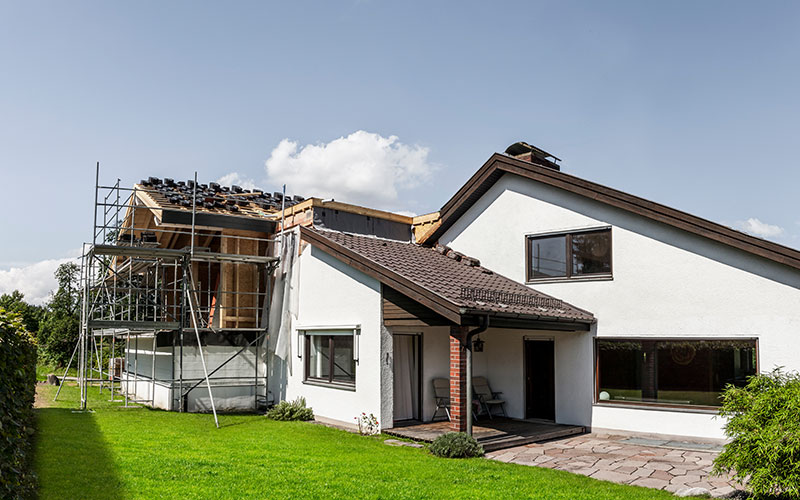
Most homeowners frame the up-versus-out question as a cost-per-square-foot comparison. When you start planning residential home additions, it’s common to collect contractor estimates, compare line items, and assume the lower number wins. That skips the constraints that often eliminate an option before you even price it. Zoning setbacks, height limits, and your foundation’s load capacity can rule out a direction long before bids come in. And the biggest cost drivers, stairs, roof tie-ins, plumbing routing, and foundation triggers, don’t show up in generic square-foot calculators.
This guide walks through the real decision sequence: feasibility filters first, cost drivers second, then preconstruction investigations, permit gates, inspection sequencing, and the decision calendar that keeps you from blowing the budget mid-project. If you want the broader construction sequencing framework first, start with a practical renovation checklist that mirrors how projects actually run:
Missy’s Field Note
Expert Tip from Missy Barbera, General Contractor
“Before you compare bids, ask your structural engineer one direct question: ‘If I build up, what exactly has to change in my existing structure?’ I’ve seen homeowners assume they’re just adding framing above, when in reality they’re triggering foundation retrofit, shear upgrades, and full roof replacement. That’s where the real cost lives, not in the new square footage.”
What “Cheaper” Actually Means
Cost per square foot is misleading. What matters is the total project cost divided by usable square footage, after accounting for circulation loss, timeline-driven carrying costs, and household disruption.
A second-story addition might price lower per square foot but lose 80–120 square feet to stairs. A horizontal addition avoids that loss but may reduce yard space or require drainage rework. If one option extends the schedule by three months and you’re carrying both a mortgage and temporary housing, that “cheaper” direction may no longer be cheaper.
The real metric is:
- Total cost
- Net usable space gained
- Timeline impact
- Disruption cost
Only when you evaluate all four together does the answer become clear.
Start With Constraints: Zoning and Structural Capacity
Before you compare numbers, determine whether both directions are legally and structurally feasible.
Zoning Envelope
Setbacks, lot coverage limits, floor-area-ratio caps, and height restrictions define the buildable envelope. If you’re already near maximum lot coverage, building out may not be allowed. If you’re near height limits or in a coastal overlay, building up may be restricted.
This analysis happens before schematic design. Designing outside your envelope wastes time and fees.
Structural Capacity
Adding a second story significantly increases dead and live loads. Slab foundations may require supplemental footings. Raised foundations often trigger seismic upgrades. Older homes frequently lack the shear walls or hold-downs required for modern lateral resistance.
If engineering shows a major retrofit is required, that cost can erase any vertical pricing advantage. When feasibility eliminates one direction, the decision can be made quickly.
If you’re already considering large-scale reconfiguration, review how whole-home projects are structured from the start.
The Cost Drivers That Swing the Answer
The biggest cost differences aren’t in framing, they’re in fixed triggers.
Stairs and Circulation Loss
A code-compliant stair typically consumes 80-120 square feet. It also costs real money, often $10,000-$25,000, depending on configuration and finish. That footprint reduces net gain and affects layout efficiency long-term.
Horizontal additions avoid that entirely.
Roof Tie-In and Weather Exposure
Building up means removing the existing roof, installing new framing, protecting the structure from the elements, and sequencing work to minimize exposure risk. Complex rooflines increase labor and flashing detail work.
Building out leaves the existing roof intact, simplifying sequencing and reducing weather-related risk.
Foundation and Retrofit Triggers
Building out requires new footings and slabs. Building up often triggers foundation bolting, shear wall upgrades, or new footings beneath bearing points. In California, seismic considerations can significantly increase costs when vertical expansion exceeds certain thresholds.
Plumbing and MEP Routing
Stacking new bathrooms over existing plumbing reduces cost. Moving them across the footprint increases drain runs and structural coordination. HVAC capacity and duct routing can push either direction higher depending on system limitations.
These variables, not average $/sf ranges, decide which direction truly costs more.
Preconstruction Investigations You Can’t Skip
Major additions rely on the existing structure. You need verified conditions before design locks.
At minimum:
- Confirm framing spans and bearing walls
- Identify the foundation type and condition
- Assess shear wall locations and hold-downs
- Verify electrical panel capacity
- Inspect the sewer lateral condition
- Test for asbestos/lead if applicable
- Confirm property lines and setback compliance
Skipping this phase is how “cheaper” turns into “change order.”
The Permit and Inspection Path
Permit submittal locks structural and major system decisions. Incomplete coordination triggers correction cycles and delays.
Inspection gates then control the schedule flow:
- Foundation
- Framing / shear
- MEP rough
- Insulation
- Final
Work pauses at each stage until approval clears. If finish decisions change after rough-in, walls reopen, and reinspections follow. That’s where budgets expand.
The Decision Calendar: What Must Be Locked Early
Late selections cause the most expensive disruptions.
Before permit submittal:
- Structural system
- Foundation design
- Window and door sizing
- Major MEP routing
Before rough-in:
- Plumbing fixture locations
- Electrical layout
- HVAC register placement
Kitchen projects are especially sensitive because cabinetry drives rough-in dimensions and sequencing.
Living Logistics: Stay or Relocate?
Vertical additions frequently require relocation when the roof comes off or stair openings are cut through the primary living space.
Horizontal additions often allow phased construction, keeping core areas functional while new square footage is framed and dried in.
Relocation costs can range from $15,000 to $40,000, depending on the duration and the rental market. Phasing avoids that cost but usually extends the schedule.
Your tolerance for disruption is part of the cost equation.
When Building Out Is Smarter
Even if you can build up, horizontal expansion may make more sense when:
- You want single-level living long term
- Mobility or aging-in-place is a priority
- You can’t relocate for months
- Foundation retrofit cost erases vertical savings
Conversely, building up may be preferable when:
- Lot coverage is maxed
- Preserving yard space matters
- Drainage or grading work would be extensive
- Zoning favors vertical massing
There isn’t a universal answer; only the direction that is feasible and aligns with household priorities.
Protecting Value
If resale is a concern, align the scope with the neighborhood ceiling and buyer expectations. Overbuilding relative to your comp set rarely yields a proportional return.
This framework applies whether you’re remodeling, adding, or expanding your home’s footprint to increase its value.
Frequently Asked Questions
How much does it cost per square foot to build up vs. out in North County?
Ranges overlap. Vertical additions typically fall in the $ 300–$400+ per square foot range. Horizontal additions can range from $275 to $375+ per square foot. Structural retrofits, roof complexity, and plumbing routing shift those numbers more than direction alone.
Can a slab foundation support a second story?
Sometimes. It depends on thickness, reinforcement, and footing design. Many slabs require supplemental footings or seismic upgrades to carry added loads.
How long does permitting take?
Plan check commonly runs four to eight weeks for straightforward additions. Coastal overlays or correction cycles extend that timeline.
Do I need to move out?
Often for full roof removal or major structural rework. Horizontal additions may allow phased occupancy.
What’s the biggest mistake homeowners make?
Deferring decisions. Fixture locations, window sizing, and structural approach must be locked before rough-in and permit approval. Late changes create rework and reinspection.
If you’re evaluating an addition in North County, the first step isn’t pricing, it’s verifying feasibility and mapping cost drivers to your property’s actual conditions. Start from constraints, not square footage.
Learn more about Skyhorse Construction’s approach to planning major remodels and additions.