

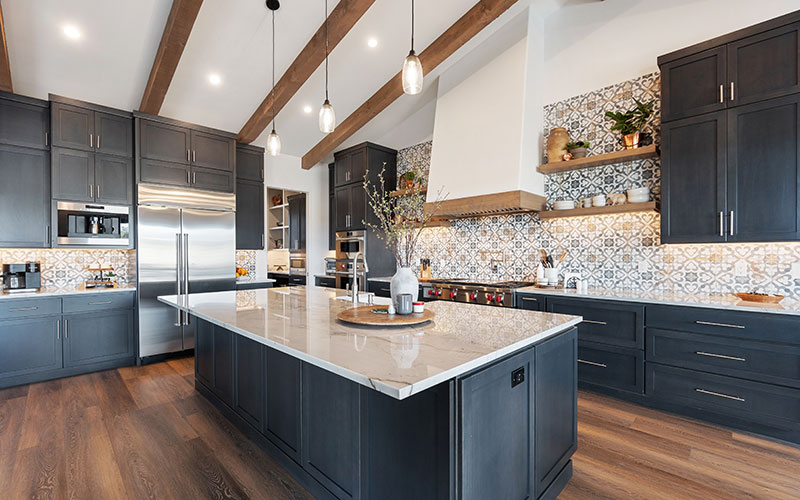
Most homeowners during a kitchen remodel treat cabinet selection as a design decision, finish, door style, hardware, and defer the technical details until later. Thoughtful kitchen cabinet planning for remodels, however, helps avoid common pitfalls. That sequencing causes problems. Cabinets don’t exist in isolation. They’re constrained by appliance dimensions, ventilation requirements, plumbing rough-in, electrical layout, and permit-triggered code compliance. When those constraints surface after cabinet specs are locked, you get change orders, schedule delays, or compromised function.
Standard cabinet guides explain materials and construction methods, but they don’t address when decisions must be made relative to your construction schedule, what documentation protects you when problems arise, or how field conditions like out-of-plumb walls affect installation success.
This guide provides a construction-sequenced framework: how layout and appliances drive cabinet design before aesthetics matter; how cabinet “tiers” affect lead times and revision cycles; which build details affect durability and tolerance absorption; and what coordination requirements with countertops and MEP trades prevent expensive rework.
If you’re planning a major remodel in North County, the goal isn’t “perfect cabinets.” It’s making cabinet decisions early enough to prevent the project from stalling during the most expensive phases.
If you want the sequencing view first, start with the step-by-step home renovation checklist.
Missy’s Field Note
Expert Tip from Missy Barbera, General Contractor
“Cabinet mistakes rarely start with cabinets. They start with a homeowner ordering cabinetry off a ‘pretty’ rendering before appliances are actually sourced and confirmed.
If you want one simple control: don’t approve cabinet shop drawings until you have the real appliance spec sheets in hand and you’ve confirmed availability. I’ve seen backorders force a substitute fridge that’s 1–2 inches deeper, then suddenly doors don’t clear, panels don’t fit, and the island needs to shift after rough plumbing is already set. That’s how a cabinet decision turns into an inspection delay.”
Start With Constraints, Not Style: What Drives Cabinet Design in a Remodel
Cabinet design is a response to decisions already made regarding layout, appliances, ventilation, plumbing, and electrical systems, not a starting point. When you reverse that order and pick cabinets first, you create conflicts that show up late, when changes are expensive.
Layout and work zones come first
The placement of the sink, cooktop, and refrigerator sets the functional framework that cabinets must support. It determines base runs, upper-cabinet breaks, tall-pantry placement, and whether you’re building around a hood, a microwave drawer, or a wall-oven stack. If the layout is still moving, the cabinetry can’t be “final.”
This is where whole-home planning matters. Kitchen cabinets are never just a kitchen decision in major work; they’re tied to the broader scope, sequencing, and MEP reality.
Appliance specifications lock cabinet dimensions
Appliances are dimensionally unforgiving. Built-in refrigerators, ranges, dishwashers, and wall ovens require exact openings, clearances, and service access. Catalog dimensions aren’t enough. You need manufacturer specifications for each model because they contain the rough-in requirements, hinge clearances, ventilation requirements, and connection locations.
If you don’t lock appliances before cabinets, you’re gambling. And if your appliance plan changes midstream, backorder, discontinued model, “we found a better one”, you can force a cabinet redesign after approvals, which is one of the fastest ways to burn budget and schedule.
Ventilation and hood requirements affect uppers
Your hood choice affects cabinet depth, duct routing, and whether you need soffits or lost upper storage. High-CFM hoods can also trigger make-up air requirements (depending on scope and jurisdiction), which introduces more mechanical coordination.
The main point: don’t treat the hood as a decorative fixture you pick later. It’s a cabinet-layout decision.
Plumbing, electrical, and lighting need to be coordinated early
Sink base configuration, disposal placement, hot water dispensers, pot fillers, and trash pullouts are all influenced by plumbing rough-in and under-sink constraints.
Electrical is just as real: receptacle spacing requirements, appliance circuits, and under-cabinet lighting wiring must align with the cabinet plan before drywall is closed. After cabinets are installed, “we’ll just run a wire” often results in visible raceways, awkward switch locations, or rework.
Learn more: Average Cost of a Kitchen Remodel
Cabinet Types and Their Planning Impacts: Stock, Semi-Custom, and Custom
The tier you choose determines more than cost and flexibility. It changes lead times, revision tolerance, and how much you can adapt to field conditions.
Lead times and revision risk
Stock tends to move fastest but offers the least flexibility. Semi-custom provides more sizing and finish options, but revisions still have real penalties once production starts. Custom offers the most control but typically entails longer lead times and less flexibility once shop drawings are approved.
The schedule risk is not theoretical. Cabinets often sit on the critical path because the countertop template can’t be created until the cabinets are installed and ready.
When field measurement matters
Custom work is often measured to the field, which means the order can’t truly be finalized until framing/drywall conditions are stable. That pushes decision timing later in the build sequence, fine if you plan for it, brutal if you assumed “we’ll order early.”
The most common schedule derailers
Appliance backorders are the repeat offender. The second is design drift during construction (“let’s move the sink” or “add a wine fridge”) after rough-in assumptions are already set.
Construction Fundamentals That Matter On Site
These choices determine how cabinets handle real-world remodeling conditions: out-of-plumb walls, uneven floors, and older framing that isn’t perfectly square.
Framed vs. frameless
Framed cabinets are generally more forgiving in remodel conditions because the face frame gives installers more tolerance for absorption. Frameless can look cleaner and offer more access, but it demands flatter walls and tighter installation precision. In older homes, the “clean frameless look” can turn into thicker fillers and visible compromises if the walls aren’t true.
Overlay and inset realities
Inset doors are the least forgiving. They require precision in box construction and installation, and they’re less tolerant of seasonal movement. A full overlay is generally the most visually forgiving in remodel environments.
Box materials and joinery
Plywood boxes and strong joinery tend to hold up best under load and over time. Lower-grade materials can fail fast when exposed to moisture (especially under sinks) or heavy usage. This isn’t about showroom language; it’s about how the cabinet holds alignment after years of opening, closing, cleaning, and occasional leaks.
Finish Systems: What Actually Holds Up in Real Kitchens
Your finish choice should match your conditions: sunlight exposure, cleaning habits, and whether you’ll be living in the home during the work.
UV, cleaners, and moisture change outcomes
Some finishes are far more resistant to chemicals and wear than others. The tradeoff is often cure time, VOC profile during application, and cost. The wrong finish in a high-use kitchen can look “tired” fast, and repainting cabinetry is not a small or cheap correction.
White paint and yellowing risk
If you have strong natural light (especially west-facing exposure), the risk of yellowing becomes real depending on the finish chemistry. This is worth discussing explicitly with your cabinet provider before you commit, because “white that drifts” is one of the most common regrets.
Sensitivities and occupancy
If you’re staying in the home during construction, VOCs and off-gassing, as well as cure time, matter. Low-VOC options can be helpful, but you still need to match them to the kitchen’s intended use and cleaning practices.
What’s Included and What Isn’t: Avoiding Scope Surprises
Cabinet bids are notorious for omissions that get “discovered” later: finished end panels, appliance panels, crown, light rail, fillers, organizers, soft-close upgrades, delivery type, protection, and install scope.
Your goal is to compare apples to apples. If one quote is materially cheaper, it’s often because something is missing, not because they found a magic deal.
Coordination Requirements: Appliances, Countertops, and MEP Trades
Cabinets don’t work unless everything around them is coordinated.
Countertop template timing is a hard dependency
Template cannot happen until cabinets are installed, level, and complete. If a cabinet arrives damaged or a run isn’t ready, template slips. When template slips, fabrication slips. When fabrication slips, plumbing final slips. And late-stage slippage can push closeout and inspection.
Rough-in alignment is where problems get expensive
Plumbing stub-outs, electrical boxes, appliance circuits, and ventilation paths should all be checked against cabinet shop drawings before drywall closes. Catching mistakes at that stage is manageable. Catching them after cabinets and tile are in is a budget leak.
Permit and Code Realities That Can Affect Cabinet Layout
Kitchen work often triggers code-driven requirements that influence cabinet plans: ventilation rules, electrical receptacle spacing, and (sometimes) accessibility-related clearances depending on scope and property context.
This is why “we’ll figure it out later” doesn’t work. Plan review and inspection are the definition of “later,” and they can force rework when the cabinets are already committed.
Risk Controls: How You Prevent the Expensive Failures
This is the part most homeowners skip, then regret.
Shop drawings are a real control gate
Shop drawings are where dimensions get fixed. Review them against appliance specs. Confirm openings, panels, filler assumptions, and any special conditions. Don’t sign off until the constraints are actually locked.
Delivery inspection prevents disputes
If you don’t document damage or missing components immediately, you’re begging for a “that happened on site” argument later. Cabinets are not something you casually accept and “sort out later” once installed.
Tolerance planning is not optional in remodels
If walls aren’t plumb or floors aren’t level, you either correct the substrate conditions or accept visual compromises (fillers, gaps, or alignment issues). Decide which you’re doing before installation day.
Installation Gates: What Must Be True Before Cabinets Go In
Cabinet installation should only happen when the site is ready. If you install into a space that’s still moving, unfinished walls, missing blocking, rough-in not aligned, you force field modifications, and rework that the homeowner pays for one way or another.
At minimum, you want:
- Rough MEPis complete and approved where required
- Blocking/backing in place for uppers and heavy units
- Walls and floors within tolerances appropriate to the cabinet type
- A plan for protection once cabinets are installed (because other trades will still be working around them)
Cabinet Decision Calendar: The Few Locks That Protect the Schedule
Cabinet decisions are a sequence, not a moment. If you lock the wrong things late, you pay for it.
The core locks are:
- Appliance models/spec sheets confirmed before cabinet drawings are approved
- Cabinet layout and key dimensions fixed before drywall close-in
- Lighting and electrical plan aligned to the cabinet plan before the rough electrical is finalized
- Sink model and install type confirmed before countertop fabrication
Treat those as schedule-critical decisions, because they are.
Final Thoughts
Cabinet decisions are construction decisions. They’re constrained by appliances, infrastructure, code compliance, and field conditions long before you get to door style and hardware.
If you sequence correctly, appliance specs first, shop drawings verified, site readiness confirmed, you prevent the change orders and schedule stalls that define stressful remodels. If you sequence poorly, cabinetry becomes the anchor that drags everything else behind it.
If you want to see how Skyhorse approaches major remodeling across North County. And if you’re planning an ADU alongside a remodel, the feasibility/permit gate model matters even more.
Frequently Asked Questions
When should I finalize appliance selections?
Before cabinet drawings are approved, and definitely before rough MEP starts. Plumbers and electricians rough-in to the appliance spec sheets (not catalog dimensions). If the model changes later due to backorders, you can trigger cabinet redesign, rework, and inspection delays.
How do I know if my walls are flat enough for frameless cabinets?
In remodels, walls and floors are rarely perfect. Frameless and inset styles show irregularities immediately and often require more fillers/scribe work (or substrate correction) to look clean. Have your GC/cabinet installer check wall flatness and floor level during a pre-install walkthrough before you commit to frameless/inset.
What’s the lead-time difference between stock, semi-custom, and custom?
Stock is typically fastest and least flexible. Semi-custom is slower with more sizing/finish options. Custom is the longest and usually depends on field measurement timing. The practical takeaway: longer lead times reduce schedule slack, so you need tighter decision discipline.
Can I change cabinet dimensions after ordering?
Sometimes, but it’s painful. Stock usually means cancel/reorder. Semi-custom may allow changes if manufacturing hasn’t started. Custom changes after shop drawing approval often mean re-fabrication. Any late change can ripple into the countertop template and final inspections.
Do I need shop drawings for stock cabinets?
Not always, but they’re still useful for complex layouts (islands, appliance panels, built-ins). For semi-custom and custom orders, shop drawings are non-negotiable; review them against the appliance spec sheets before sign-off.
How do I inspect cabinets on delivery?
Match carton count to the packing list, inspect for visible damage, and document issues before the driver leaves. Take photos and note them on the delivery receipt. Once the cabinets are installed, responsibility for any damage becomes a point of dispute.
Why do high-CFM hoods affect cabinet design?
Because duct routing and (sometimes) make-up air requirements can force layout changes, soffits, or lost upper storage. If the hood and vent path aren’t resolved early, you may end up redesigning the uppers after the cabinet specs are already locked.
When do I finalize the sink and faucet?
Before countertop fabrication. Undermount vs. drop-in, and the exact sink model determine cutouts and reveal. Faucet choices can also affect hole drilling and accessory placement (e.g., soap dispensers and filtration taps).