

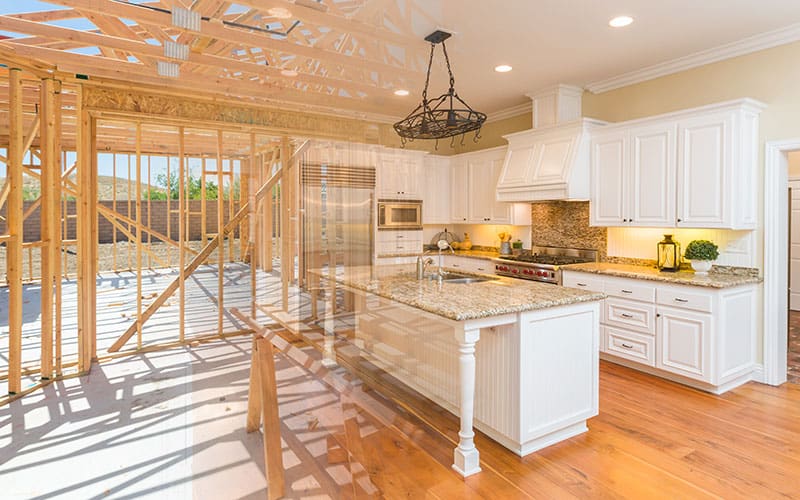
Most homeowners planning a whole-home remodel focus on finishes and floor plans. If you’re considering a whole home remodel in North County San Diego, it’s important to understand the full process. They compare cabinet styles and sketch layouts. What they don’t map is the construction sequence itself, the permit triggers, inspection gates, lead times, and decision deadlines that determine whether the project stays on schedule and within budget.
A remodel succeeds or fails on execution discipline. Cabinetry that arrives late idles your plumber. A failed rough-in inspection delays drywall installation by weeks. A hidden structural issue without a clear discovery protocol turns into unmanaged budget creep.
This guide walks through what must be investigated before demolition, how permitting and inspections affect the schedule, when selections must be locked to avoid cascading delays, and how to decide between phasing and a full-gut approach. If you’re planning a major renovation in North County San Diego, this will give you a realistic timeline framework you can actually execute.
When a Whole-Home Remodel Makes Sense
Whole-home scope isn’t always the right move. It becomes appropriate when systems, layout, and deferred maintenance overlap in ways that make room-by-room updates inefficient.
Aging Systems and Compounding Inefficiency
If your electrical panel is undersized, your plumbing is galvanized or corroded, and your HVAC is nearing the end of its life, piecemeal upgrades create repeated disruptions. A kitchen remodel that adds a subpanel still requires you to replace the main service later. A bathroom renovation that exposes failing supply lines means reopening walls again in the next phase.
In coastal North County homes built before 1980, undersized panels, salt-air corrosion, and outdated duct systems are common. When multiple core systems are nearing replacement, consolidating work reduces redundant mobilization costs and shortens total disruption.
Layout Changes That Trigger Code Upgrades
Removing a wall to open a kitchen often requires structural engineering. That triggers permits. Permits trigger current code compliance across touched systems.
Adding a primary suite may require updated egress, electrical upgrades, fire-blocking, and ventilation compliance in adjacent areas. Once structure and systems are involved, the scope expands. Addressing these comprehensively in one phase is typically more efficient than triggering new permit cycles later.
Deferred Maintenance Overlap
When roofing, window, framing, and interior finishes are all due, sequencing them separately increases costs and contamination risk. A whole-home scope allows exterior envelope work, structural corrections, systems upgrades, and finishes to proceed in a logical order rather than in isolated bursts.
Learn More: Home Remodeling Services
Preconstruction Investigation: What You Can Know Before Demo
Preconstruction reduces risk. It does not eliminate it.
Strategic Opening and Testing
Limited wall and ceiling openings reveal plumbing condition, insulation type, framing adequacy, and routing paths before demolition begins. Electrical panel load testing confirms whether a service upgrade is required. Structural review documents beam sizes and load paths before engineering drawings are finalized.
In coastal homes, these openings frequently reveal corrosion, moisture intrusion, or undersized framing that affects scope before contracts are locked.
What You Cannot Confirm Until Demo
You cannot fully confirm the condition of concealed rot, slab-buried drains, unpermitted structural modifications, or hidden wiring methods without demolition. These discoveries occur after finishes are removed and framing cavities are exposed.
Preconstruction narrows uncertainty. It does not remove the need for contingency.
Learn More: Whole House Renovation Cost
Permits and Inspections: Where Timelines Expand
Homeowner decisions directly influence permit complexity.
When Engineering Is Required
Structural changes, panel upgrades, relocated plumbing, new openings, and roof modifications typically require engineered drawings. Each discipline, structural, electrical, mechanical, and plumbing, adds review layers.
Finishes-only work with no layout or systems changes is far simpler and moves through review faster.
Plan-Check Cycles
Initial review often takes several weeks. Corrections extend that timeline. Each resubmission can add additional weeks.
Incomplete submissions or late design changes are common schedule risks. Construction does not begin until permits are issued.
Inspection Gates
Rough framing and MEP inspections occur before insulation and drywall. Insulation inspection verifies energy compliance and fire-blocking. Final inspection confirms life-safety systems and code-required installations.
Failures stop progress. Corrections require re-inspection. Understanding what inspectors check and preparing accordingly helps prevent schedule delays when finishes are already in place.
The Decision Calendar: What Must Be Chosen When
Late decisions are the most common cause of schedule collapse.
Cabinetry and Millwork
Cabinet lead times often range from eight to sixteen weeks. Cabinet installation must occur before countertop templating. Countertops must be installed before plumbing trim and backsplash. Delays cascade.
Selections must be finalized months before installation, not weeks.
Plumbing Fixtures and Tile
Rough-in dimensions depend on fixture type. Valve heights, drain locations, and supply spacing must be confirmed before inspection.
Finish selections can wait longer, but dimensional decisions cannot. Tiles with extended lead times must be ordered early to avoid delays in waterproofing and installation.
Appliances and Electrical Specifications
Electrical rough-in depends on appliance requirements. Circuit amperage, venting configuration, and clearances must be known before walls close.
Delivery can occur later. Specifications cannot.
Buffers and Dependencies
Every selection affects downstream trades. Building schedule buffers protects against manufacturing delays. The “latest responsible moment” for each decision is weeks, not days, before installation.
Hidden Conditions and Contingency Governance
Discovery is normal in older homes.
Documentation Protocol
Every hidden condition should be photographed, logged, and documented before corrective work begins. Written change orders should clearly state cost and schedule impact.
Verbal approvals create disputes. Written authorization protects both parties.
Necessary vs Deferrable Work
Structural repairs, code-required upgrades, and moisture intrusion must be addressed immediately. Cosmetic improvements can be deferred.
A contingency of 10-15% is typically applied to documented hidden conditions, not to elective upgrades.
Clear governance prevents budget drift.
Phasing vs Full-Gut: A Livability Framework
This decision is about safety and execution efficiency not just cost.
When Phasing Works
Phasing requires:
- One fully functional bathroom
- A workable temporary kitchen
- Clear egress routes
- Isolated systems work
Phased remodels typically extend overall duration due to sequential mobilization and repeated setup.
When Full-Gut Is More Efficient
Whole-home electrical upgrades, replumbing, structural reconfiguration, and HVAC replacement often favor a single mobilization. Trades work continuously. Inspections occur in clean sequence. The timeline compresses despite relocation.
In many coastal homes with distributed system deficiencies, full-gut execution reduces long-term disruption.
Living Logistics During Construction
If you remain in the home, plan realistically.
Dust and Air Control
Containment barriers and negative air machines reduce migration but do not eliminate dust. Open floor plans make containment more difficult. Expect daily cleaning and some exposure.
HVAC Shutdowns
System modifications require downtime. Portable solutions provide partial comfort but not full performance.
Temporary Kitchens and Bathrooms
A functional temporary setup requires ventilation, refrigeration, water access, and secure storage. These logistics must be planned before demolition begins.
Safety Zones and Egress
Construction zones must remain physically separated from living areas. Egress routes must stay code-compliant at all times. Safety constraints often determine whether relocation is the responsible choice.
Final Thoughts
Whole-home remodels succeed when sequencing discipline matches design ambition. Early decisions, complete permit submissions, inspection readiness, and structured contingency governance protect schedule and budget more effectively than reactive problem-solving.
In North County San Diego, coastal exposure, older housing stock, and jurisdictional permit cycles increase discovery risk and timeline variability. Preparation reduces those variables and can often lead to a higher home value.
The projects that finish on schedule are the ones where decisions were made early, risks were acknowledged, and process, not optimism, drove execution.
Frequently Asked Questions
What’s the difference between a whole-home remodel and a gut renovation?
A whole-home remodel updates multiple rooms and systems while leaving some structural elements or layouts intact. A gut renovation removes interior finishes to studs and replaces all major systems. Gut projects are more disruptive and expensive but often more efficient when systems are failing or structural reconfiguration spans multiple areas.
How long does a whole-home remodel take?
Preconstruction and design typically take two to four months. Permitting may add several weeks depending on scope and jurisdiction. Construction ranges from four months for limited reconfiguration to nine months or longer for comprehensive system replacement and structural changes.
What can be confirmed before demolition?
Panel capacity, roof framing, foundation condition, and visible routing can often be assessed pre-demo. Concealed rot, slab-buried drains, and hidden wiring methods are typically discovered only after demolition exposes framing cavities.
When must cabinetry and plumbing selections be finalized?
Cabinetry often requires selection two to three months before installation due to manufacturing lead times. Plumbing fixture rough-in specifications must be confirmed before inspection. Finish details can wait longer, but dimensional requirements cannot.
What happens if an inspection fails?
Work pauses until corrections are completed and a re-inspection is conducted. Minor code oversights can add weeks to a schedule. Preparing thoroughly before calling inspections reduces the risk of failure and avoids costly rework.
Should I live in my home during the remodel?
Living in place is feasible only if you can maintain a functional bathroom, temporary kitchen, safe egress routes, and dust separation. Projects involving whole-home system replacement or structural reconfiguration typically favor relocation for safety and efficiency.
How much contingency should I plan for?
Most whole-home remodels require 10-15% contingency for documented hidden conditions. Pre-1980 coastal homes may warrant higher allowances due to corrosion, moisture intrusion, and outdated systems. Contingency is governed by spending, not discretionary upgrade funding.