

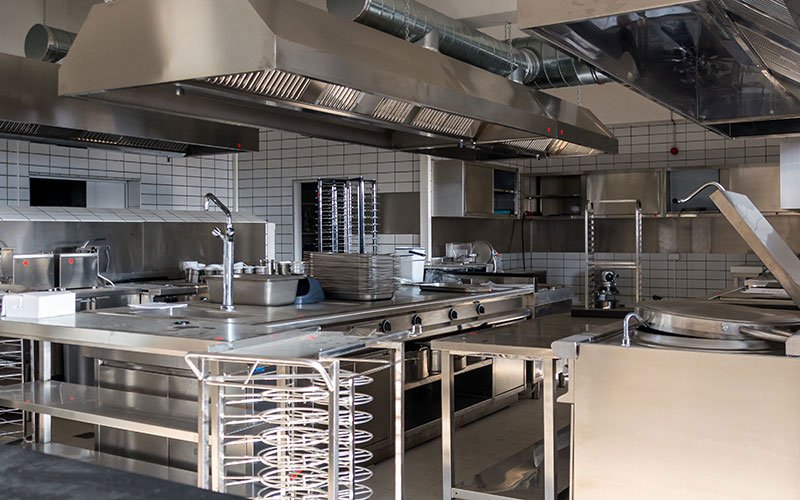
A California restaurant build-out typically runs $150 to $750 per square foot for hard costs, with the upper range driven by fine dining, custom millwork, and complex kitchen systems, and the lower range driven by quick-service concepts in second-generation restaurant spaces.
A 3,000 square foot full-service restaurant in coastal San Diego County commonly lands between $750,000 and $2.25 million for the construction phase alone, before equipment beyond what’s built in, before furniture, and before pre-opening operating capital.
The number that matters more than the per-square-foot range is the condition of the space at landlord delivery. A second-generation restaurant with usable kitchen infrastructure can build out at one-third the cost of a vanilla shell, which itself runs lower than gray shell or ground-up construction. Most cost guides skip this distinction. It is the single largest variable in the budget.
What “Build-Out” Actually Includes (and What It Doesn’t)
Restaurant build-out cost refers to the construction work required to convert a leased or owned space into an operational restaurant. It typically includes hard construction (structural modifications, MEP rough and finish, walls, ceilings, flooring), built-in kitchen infrastructure (hood systems, grease interceptors, walk-in coolers, three-compartment sinks), front-of-house finishes (millwork, lighting, fixtures), and soft costs tied to construction (architecture, engineering, permits).
Build-out cost typically does not include free-standing FF&E (furniture, fixtures, and equipment that gets unboxed and placed), opening inventory, POS and technology not built into the structure, signage outside the construction permit, working capital for the first ninety days, or rent during the build period.
These costs are real and substantial. FF&E alone often runs 30 to 40 percent of the construction build-out figure. Treating build-out as the whole project budget is one of the most common reasons restaurants run out of capital before opening.
Cost Ranges by Restaurant Type
The cost-per-square-foot benchmark varies materially by concept. The complexity of the kitchen, the level of finish in the dining room, the bar program, and the customization of the design all drive the range.
| Restaurant Type | Cost Range per SF | Typical Total (3,000 SF) |
|---|---|---|
| Quick service (counter, no table service) | $150 to $400 | $450,000 to $1.2M |
| Fast casual (counter order, table delivery) | $200 to $500 | $600,000 to $1.5M |
| Casual full-service | $250 to $550 | $750,000 to $1.65M |
| Upscale casual or polished | $350 to $700 | $1.05M to $2.1M |
| Fine dining | $500 to $1,000+ | $1.5M to $3M+ |
| Bar-forward concept (with kitchen) | $400 to $800 | $1.2M to $2.4M |
| Coffee shop / bakery | $200 to $450 | $600,000 to $1.35M |
These ranges assume a shell delivery somewhere between gray shell and warm shell. They run higher when starting from vanilla shell or ground-up construction, and they can run substantially lower when taking over a second-generation restaurant space in good condition.
The Shell Delivery Condition Matrix
This is the variable that gets undertreated in every cost guide and that drives the largest single swing in your budget. Five conditions describe the spectrum of how the space arrives at the start of construction.
Cold dark shell.
Bare concrete floor, exposed ceiling, no MEP rough-ins, no demising walls, no entrance, no restrooms. Found in new commercial construction where the developer delivers the building envelope only. Restaurant build-out from cold dark shell runs the highest because every system has to be designed and installed from scratch.
Vanilla shell (or gray shell).
Demising walls in place, basic MEP rough-ins (electrical service to a panel, plumbing stubbed, HVAC base unit installed), painted walls, basic flooring or sealed concrete, ADA-compliant restrooms, basic lighting, one entry door. The most common landlord delivery condition for new shopping center or mixed-use development.
Restaurant build-out from vanilla shell still requires substantial work because restaurants demand specialized MEP (grease waste, hood exhaust, refrigeration loads) that vanilla shell does not contemplate.
Warm shell.
Vanilla shell plus restaurant-anticipated infrastructure: increased electrical service, gas service to the space, larger HVAC capacity, restroom plumbing sized for higher occupancy, ceiling grid installed. Some landlords offer warm shell delivery specifically for food-service tenants. Build-out costs run lower than vanilla shell because the highest-cost MEP components are partially in place.
Second-generation restaurant.
The space was previously operated as a restaurant. Kitchen hood, grease interceptor, walk-in cooler infrastructure, three-compartment sinks, dish areas, restrooms, and dining space may all exist and be usable to varying degrees. Build-out cost depends entirely on what’s salvageable.
Best-case second-gen with a similar concept can run $50 to $150 per square foot. Worst-case second-gen with a concept mismatch or non-compliant existing conditions can run higher than vanilla shell because demolition and rework are required.
Ground-up construction.
Building the structure itself in addition to the interior fit-out. Adds $200 to $400+ per square foot for shell construction on top of all interior build-out costs. Typically reserved for owned property, pad sites in commercial developments, or destination restaurants where the building is part of the concept.
The matrix below summarizes the typical build-out cost range for a casual full-service restaurant in coastal San Diego County by shell delivery condition.
| Shell Condition | Build-Out Cost per SF | Why It Matters |
|---|---|---|
| Second-generation (compatible concept) | $75 to $200 | Most infrastructure exists and works |
| Second-generation (concept mismatch) | $200 to $400 | Demolition costs offset reuse savings |
| Warm shell | $200 to $450 | Restaurant MEP partially provisioned |
| Vanilla shell | $300 to $600 | All restaurant-specific MEP added |
| Cold dark shell | $400 to $750+ | Full systems and finishes from scratch |
| Ground-up construction | $500 to $1,000+ | Shell construction plus complete fit-out |
Before signing any restaurant lease, the single most valuable diligence step is documenting exactly what landlord delivery condition is contractually committed, and confirming it against the matrix above.
A landlord who agrees to deliver warm shell instead of vanilla shell may save the tenant $50 to $100 per square foot in build-out cost.
Where the Money Goes Inside a Restaurant Build-Out
For a typical casual full-service restaurant build-out from vanilla shell, the line items fall roughly as follows. Percentages vary by concept but the structure holds.
- The kitchen and back-of-house systems consume 35 to 45 percent of construction cost. This includes the Type I exhaust hood with Ansul fire suppression ($25,000 to $80,000 installed), grease interceptor ($8,000 to $25,000), walk-in cooler and freezer infrastructure ($15,000 to $60,000 not counting the unit itself), specialized plumbing for three-compartment sinks and hand sinks, gas distribution, and increased electrical service.
- The front-of-house build consumes 25 to 35 percent. This is dining room flooring, ceiling, lighting, millwork (host stand, bar, banquettes, service stations), wall finishes, acoustical treatments, and dining-area HVAC distribution.
- The bar build, when present, often consumes 8 to 15 percent on top of the front-of-house allocation. Beer lines, cold draft systems, ice wells, glass washing, refrigerated bottle storage, and bar millwork all add up quickly. A high-end bar program can run $75,000 to $250,000.
- Restrooms and ADA compliance take another 5 to 10 percent. California Title III requirements drive design, and even compliant existing restrooms often need rework when occupancy load changes.
- MEP upgrades beyond what’s in shell delivery will eat 10 to 20 percent. This is increased electrical service, HVAC capacity for kitchen heat load, gas service upsizing, and water/sewer modifications.
- Architecture, engineering, permits, and soft costs typically run 8 to 15 percent of hard construction cost, sometimes higher for complex sites or design-intensive concepts.
What California Adds to the Cost and Timeline
California restaurant build-outs sit inside a layered permitting and code environment that increases both cost and schedule compared to lower-regulation states. Five layers matter.
Building Department.
The standard permit for tenant improvement, with plan check by the local jurisdiction. For coastal San Diego County, this is the City of Carlsbad, City of Encinitas, City of Solana Beach, City of Del Mar, or County of San Diego Building Department depending on location. Plan check timelines vary from four to twelve weeks for restaurant TI.
Health Department.
California restaurants require a separate plan approval from the County of San Diego Department of Environmental Health (Food and Housing Division).
The Health Department reviews the kitchen layout, finishes, equipment specifications, plumbing schedule, and grease management before construction begins and inspects the build during and at completion. Health Department plan review adds three to eight weeks to the front end and is the most common source of plan revisions during the project.
California Department of Alcoholic Beverage Control (ABC).
Restaurants serving alcohol require an ABC license. Type 41 (beer and wine with food) is the most common new-restaurant license; Type 47 (full liquor with food) is required for full bars. ABC licensing runs in parallel with construction but has its own approval timeline (typically 90 to 180 days) and requires posted notice, neighborhood input opportunity, and zoning compatibility verification.
ADA Title III (federal) and California Title 24 Part 5.
Restaurants are public accommodations under the federal ADA and must meet California’s more stringent accessibility standards. Path of travel from the public right-of-way, restroom configuration, counter heights, table heights, and aisle widths all have requirements. Existing buildings without compliant elements typically must bring those elements into compliance during the build-out. This is a frequent source of unbudgeted cost in second-generation conversions.
Title 24 energy code.
California’s energy standards apply to lighting, HVAC, building envelope, and process loads. Restaurants face specific Title 24 requirements for kitchen ventilation, walk-in cooler insulation and lighting, and food service equipment efficiency. Title 24 documentation is part of building permit submission.
In coastal jurisdictions, a sixth layer may apply: Coastal Development Permit review when the property sits inside the California Coastal Zone and the work touches exterior elements, signage, lot coverage, or parking. CDP review can add three to nine months when triggered.
The cumulative effect of these approvals is that a California restaurant build-out from vanilla shell typically runs four to nine months from permit submission to certificate of occupancy.
Contingency by Risk Class
Restaurant build-outs are higher-risk than most commercial construction because of the density of trade work, the inspection layers, and the frequency of unforeseen conditions in existing spaces. Contingency reserve recommendations:
- Low-risk projects (Cold shell with no surprises, simple concept, experienced operator): 10 to 15 percent contingency.
- Medium-risk projects (Vanilla shell with standard restaurant systems, typical full-service concept): 15 to 20 percent contingency.
- High-risk projects (Second-generation conversions, older buildings, complex concepts, fine dining): 20 to 30 percent contingency.
The contingency is not optional. Skipping it does not save money. It moves the same money from a budgeted line item to a panic line item, usually at a worse price.
Where Restaurant Budgets Actually Break
Four patterns account for most restaurant build-out cost overruns.
- Underestimating the shell delivery problem. The grease waste line is undersized. The electrical service cannot support the kitchen load. The HVAC isn’t sized for the kitchen heat. Each is a five-figure to mid-six-figure correction discovered during construction rather than during lease negotiation. Diligence before lease signing pays for itself many times over.
- Health Department plan revisions. First-time operators submit plans designed around the building code without fully understanding Health Department requirements. Plans come back with required changes, sometimes minor, sometimes requiring demolition of finished work. A designer with active California restaurant Health Department experience prevents most of this.
- Equipment scope creep. The walk-in gets bigger. The hood adds a section. The bar gets a glycol system. Each change is justifiable and each one adds cost and schedule. Locking equipment specifications before permit submission is one of the highest-leverage cost controls.
- ADA compliance surprises. Second-generation conversions inherit non-compliant elements that the new build is responsible for correcting. Path of travel, restroom accessibility, and counter heights are the most common triggers.
FAQs
How long does a typical California restaurant build-out take from lease signing to opening?
Six to twelve months for a full-service restaurant from vanilla shell. The breakdown is roughly two to four months of design and permitting, three to six months of construction, and one to two months of final inspections, Health Department sign-off, ABC licensing finalization, and pre-opening setup.
Second-generation conversions can run on the shorter end. Ground-up construction and fine dining concepts can run on the longer end or beyond it.
Is it cheaper to take over a second-generation restaurant or build out a vanilla shell?
Almost always cheaper to take over second-generation if the previous concept is compatible and the existing infrastructure (hood, grease interceptor, walk-in, restrooms) is in usable condition and current with code. The savings can be 50 to 70 percent on construction cost. The risk is that an apparently compatible second-gen turns out to have non-compliant systems that require rework, which can wipe out the savings.
What is the largest single cost item inside a restaurant build-out?
For a full-service restaurant, the kitchen exhaust hood system (Type I hood with Ansul fire suppression, makeup air, and supporting electrical) is typically the largest single mechanical item at $25,000 to $80,000+ installed.
For larger or fine-dining concepts, the walk-in cooler/freezer system or the bar build can exceed it.
Does my landlord pay for any of the build-out?
Most restaurant leases include a tenant improvement allowance contributed by the landlord. TI allowances for restaurants in coastal San Diego County commonly range from $25 to $100 per square foot for casual concepts in stable centers, and higher for anchor tenants in new developments.
The allowance is negotiated and varies widely. The TI allowance rarely covers the full build-out cost, and the gap is the tenant’s responsibility.
How much should I budget for soft costs (architect, engineer, permits) on a California restaurant?
Soft costs typically run 8 to 15 percent of hard construction cost for a standard restaurant TI, sometimes higher for design-intensive concepts or sites with complex permitting. For a $1.5 million construction project, soft costs of $120,000 to $225,000 are typical.
Can a designer save me money on the build-out?
A designer with active California restaurant experience usually pays for themselves several times over by anticipating Health Department requirements, sequencing trades efficiently, and preventing the most expensive change orders. The savings are largest on second-generation conversions where existing-conditions navigation is critical.
What’s the difference between build-out cost and total project cost?
Build-out covers hard construction, built-in equipment, and construction-related soft costs. Total project cost adds FF&E (typically 30 to 40 percent of build-out), opening inventory, working capital, deposits, and licensing. A $1 million build-out typically corresponds to a $1.5 million to $2 million total project.
Do I need a general contractor with specific restaurant experience?
Strongly recommended. Restaurant TI involves trade coordination (electrical, plumbing, gas, refrigeration, hood specialist, fire protection, finish carpentry, equipment installer) and inspection layers (Building, Health, Fire, ABC) that are unfamiliar to GCs whose portfolio is residential or general commercial.
A GC who handles two to four restaurant projects per year in your jurisdiction will navigate the inspection process and trade sequencing materially better than one who doesn’t.
Learn More: What Does a General Contractor Do?