

A tenant improvement allowance (TIA, sometimes TI allowance) is money a commercial landlord agrees to contribute toward the cost of customizing leased space for a specific tenant. Almost every commercial real estate guide written about TIA approaches it from one of two angles: the broker’s negotiation perspective or the landlord’s financial perspective.
What’s missing from the SERP is the contractor’s perspective: how TIA actually flows through to the construction project, what it does and doesn’t cover, and what common gotchas only become visible once the money meets the buildout.
This guide covers TIA fundamentals plus the construction-side reality of working with TIA-funded projects. For broader commercial construction context, see our types of commercial construction guide.
What a tenant improvement allowance actually is
A TIA is a contribution from the landlord toward the cost of improvements the tenant needs to make the leased space functional for their business. The improvements typically include partitions, finishes, lighting, HVAC modifications, electrical and plumbing changes, and sometimes structural alterations.
The allowance is documented in the lease, expressed either as a dollar amount per rentable square foot (most common) or as a percentage of total rent.
The key thing to understand: TIA is a maximum contribution, not a target. If the allowance is $50 per rentable square foot and the tenant’s buildout costs $75 per RSF, the tenant pays the $25 per RSF overage. If the buildout costs $35 per RSF, the unused $15 per RSF typically doesn’t transfer to the tenant in cash unless specifically negotiated to do so.
How TIA is calculated and expressed
- Per rentable square foot. The most common format. The landlord offers a specific dollar figure per RSF for the buildout. A 5,000 RSF space with $50 per RSF TIA produces $250,000 in landlord contribution.
- Percentage of annual rent. A percentage of the first year’s rent or aggregate lease term rent. Less common in current markets but appears in some lease structures.
- Lump sum. A fixed dollar amount regardless of square footage. Less common, used in specific deal structures.
- Turnkey. Not technically a TIA. The landlord delivers a fully built-out space to specifications agreed in the lease. The tenant pays nothing for the buildout but typically pays higher rent. Common in larger commercial deals where landlords want to control buildout quality.
Typical TIA ranges in coastal Southern California 2026
| Property type | Vanilla shell / first generation | Second generation | Notes |
|---|---|---|---|
| Office (Class A) | $50–$100/RSF | $25–$50/RSF | Higher for medical, lower for traditional office |
| Office (Class B) | $30–$70/RSF | $15–$40/RSF | Varies widely by submarket |
| Retail | $50–$150/RSF | $25–$75/RSF | Anchored retail centers often higher |
| Restaurant | $75–$250/RSF | $50–$150/RSF | Highest TIA range due to specialized buildout |
| Medical office | $75–$200/RSF | $50–$125/RSF | Specialized equipment requirements drive higher |
| Light industrial | $5–$25/RSF | $2–$15/RSF | Minimal buildout typically required |
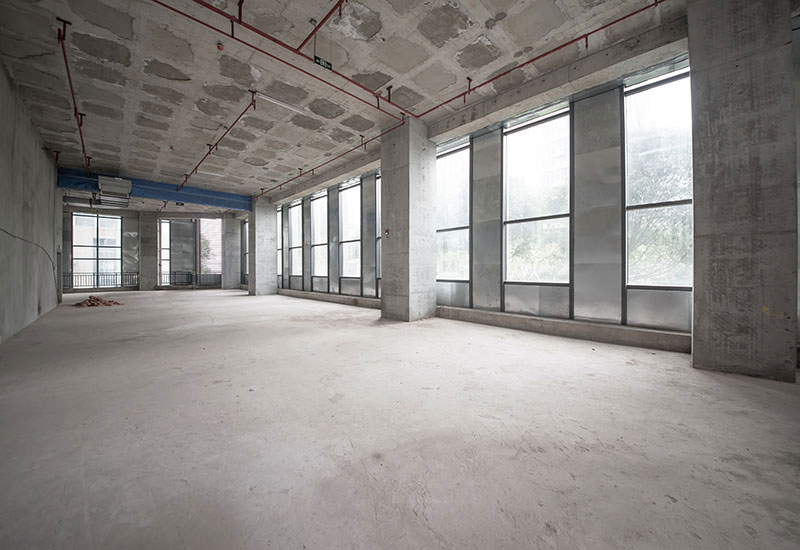
Vanilla shell means the landlord delivers an unfinished space (typically four walls, basic utilities to the perimeter, demising walls between units) and the tenant builds it out completely.
Second generation means the space was previously built out for another tenant; the new tenant typically needs less work to make it functional.
These ranges reflect Class A and B markets in coastal North County (Carlsbad, Encinitas, Solana Beach, Del Mar, parts of San Diego). Class C and inland markets typically run 30–50 percent below these ranges. Premier markets and prestige addresses run above the high end.
Disbursement structures
How and when the landlord actually pays the TIA matters enormously for the construction project. Most SERP content treats disbursement as an afterthought, but it directly affects contractor cash flow, project schedule, and tenant out-of-pocket expense.
Lump sum at completion
The landlord pays the entire TIA after the buildout is complete and approved. The tenant or contractor funds the construction cash flow throughout the project.
Pro: simplifies landlord accounting. Con: significant tenant or contractor capital required during construction (typically 4–8 months for restaurant or retail buildout, 2–4 months for office). Most contractors won’t carry this volume of work without a financial arrangement with the tenant.
Progressive draws against work completed
The landlord reimburses tenant for incurred costs at agreed intervals (monthly, by milestone, etc.). Tenant submits invoices and lien waivers; landlord pays after verification.
Pro: distributes cash flow burden across the project. Con: requires careful documentation and creates timing gaps between when the contractor needs payment and when the landlord reimburses. Most common structure for mid-sized TI projects.
Work letter completion
The landlord pays the contractor directly per a “work letter” approved before construction starts. Work letter defines the scope, allowable costs, payment schedule, and approval gates.
Pro: separates the tenant from the construction payment flow. Con: limits tenant flexibility on scope changes and contractor selection. Common for larger institutional landlords.
Rent abatement
Instead of paying cash for the buildout, the landlord credits the TIA value against future rent.
Pro: simple for landlord. Con: tenant funds the entire buildout out-of-pocket upfront and is reimbursed through reduced rent over time. Cash-flow challenging for tenants without strong reserves.
Amortized into rent
The landlord pays for the buildout but increases base rent over the lease term to recover the TIA cost plus interest. The TIA becomes a financing arrangement embedded in the lease. Pro: no upfront cash from either party. Con: tenant pays interest on the TIA over the lease term, often at rates higher than market financing.
Each structure has tax implications (covered briefly below) and project execution implications. Most negotiations focus on TIA amount, but the disbursement structure often matters as much for project success.
What TIA covers: hard costs
Hard costs are the direct construction costs of building the space. TIA typically covers these without restriction:
- Demolition of existing partitions and finishes
- Structural modifications (with landlord approval)
- New partition walls, doors, and door hardware
- Drywall, taping, and painting
- Ceiling systems (acoustic tile, drywall ceilings, exposed structure treatments)
- Flooring (carpet, LVT, hardwood, tile, polished concrete)
- Interior lighting and electrical modifications
- Plumbing modifications to existing fixtures and new fixture installation
- HVAC modifications, ductwork extensions, and zone additions
- Cabinetry and millwork
- Restroom upgrades and ADA compliance work
- Glass partitions and storefront systems
- Specialty finishes (decorative ceilings, accent walls, custom trim)
What TIA covers: soft costs (with negotiation)
Soft costs are non-construction expenses that vary in TIA inclusion. Negotiate these explicitly:
- Architectural and design fees
- Engineering fees (MEP, structural)
- Permit fees
- Construction management fees (sometimes excluded)
- Title 24 documentation and HERS testing
- Plan check fees
- Fire department review fees
- Special inspections
Soft costs typically run 8–15 percent of hard costs on a commercial buildout. Confirming whether the TIA covers soft costs significantly affects total tenant out-of-pocket expense.
What TIA typically does NOT cover
Furniture, fixtures, and equipment (FF&E). Desks, chairs, workstations, conference room equipment, kitchen appliances (for office break rooms), specialty equipment (restaurant kitchen equipment, medical equipment, salon equipment). FF&E is typically tenant-funded entirely.
- Information technology and cabling. Network infrastructure, data center build-out, structured cabling (typically), AV equipment, telephone systems. Sometimes basic cabling is negotiable but specialized IT is usually tenant-funded.
- Moving expenses. Cost of moving from current space to new space.
- Tenant-specific specialty equipment. Restaurant kitchen equipment, medical equipment, manufacturing equipment, gym equipment, salon equipment, retail fixtures and display systems.
- Insurance and bonding for construction. Sometimes covered, often excluded.
- Project management or owner’s representative fees when the tenant hires their own PM.
- Security systems, alarms, and access control. Sometimes covered as part of building standard; specialty tenant security typically excluded.
- Signage. Exterior signage typically tenant-funded. Interior wayfinding sometimes covered.
- Overages. Critical: TIA is a maximum. Any cost above the TIA is tenant’s responsibility regardless of cause (scope additions, material price increases, concealed conditions, change orders).
Negotiating TIA effectively
- Know the market. TIA ranges vary by submarket and property class. Bid your space against current market comparables, not the landlord’s first offer. Brokers representing tenants can pull recent comparable lease data.
- Longer lease terms justify higher TIA. Landlords amortize TIA cost over the lease term. A 10-year lease justifies roughly twice the TIA contribution of a 5-year lease in pure economic terms. Negotiate accordingly.
- Strong tenant credit drives higher TIA. Established businesses with strong financials and long operating histories attract better TIA offers than newer or weaker tenants. Document your credit profile.
- High-vacancy markets favor tenants. Landlords with vacancy compete more aggressively on TIA than landlords in tight markets.
- Get construction estimates before signing. A rough buildout estimate (even at 60–70 percent design) tells you whether the TIA actually covers your needs. Signing a lease with inadequate TIA leads to significant tenant out-of-pocket overage.
- Negotiate the disbursement structure, not just the amount. Progressive draws are easier for tenants than lump sum at completion. Work letter structures can give tenants less flexibility. Negotiate both.
- Push for unused allowance flexibility. Some leases allow unused TIA to convert to free rent, building system upgrades, or other uses. Negotiate this explicitly.
- Watch the time limits. Many leases require TIA to be used within a specific window (often 12 months of lease commencement). Unused allowance after the window expires.
The contractor’s perspective on TIA
Working with TIA-funded projects has specific implications for how contractors bid, execute, and bill the work.
Bidding for TIA budget.
Contractors who understand the specific TIA amount can bid scope accordingly, value-engineering finishes and details to fit within the available budget. The contractor who doesn’t ask about TIA budget bids in a vacuum and often overprices for the available funds.
Landlord-approved contractor lists.
Some landlords require contractors to be on an approved list. Confirm this before final contractor selection. Approved lists vary in restrictiveness: some are advisory, some are mandatory, some include only union contractors. Verify early in the process.
Building standard restrictions.
Some leases require buildout to use building-standard materials and systems (specific paint manufacturer, specific carpet, specific lighting). Building standards are typically lower-cost than premium alternatives, which can free TIA dollars for other improvements but limits design flexibility.
Lien waiver requirements.
Most TIA disbursement structures require contractor lien waivers (conditional progress, unconditional final) before payment. Ensure your contractor has clean lien waiver processes; payment delays from missing or improperly executed lien waivers are common.
Change order management.
Changes that push the project past the TIA become tenant out-of-pocket. Strong change order discipline matters more on TIA-funded projects than on owner-funded projects because of the hard budget ceiling.
Cash flow timing.
Even with progressive draws, there’s typically a 30–60 day gap between when the contractor invoices and when the landlord pays. Some contractors require tenant guarantees or arrangements to cover this gap. Build this into your cash flow planning.
Documentation requirements.
TIA-funded work requires more documentation than owner-funded work. Itemized invoices, lien waivers, certificates of insurance, permit copies, inspection sign-offs, final completion documentation. Plan for the administrative burden.
Coastal North County context
Several factors specific to coastal North County affect TIA negotiations and execution beyond general California commercial considerations.
- Coastal Commission CDP review. Some commercial spaces in the coastal zone trigger CDP review for envelope changes. CDP review adds 60–120 days to project schedule. The TIA usage window should accommodate this. Interior-only buildout typically doesn’t trigger CDP review.
- High construction cost market. Coastal North County commercial construction runs 15–30 percent above national averages. TIA benchmarks should reflect local pricing, not national. Out-of-area landlords sometimes offer TIA at national norms that won’t actually cover local construction cost.
- Specialty market expectations. Coastal North County restaurants, boutique retail, and high-end professional services have elevated finish expectations beyond standard commercial buildouts. Premium finish levels affect cost; ensure TIA accommodates the level your business actually needs to operate.
- Health and fitness sector growth. North County has a significant fitness, wellness, and medical aesthetics market. These uses often have specialized buildout requirements (heavy floor loading, advanced HVAC, specialty plumbing, soundproofing) that drive TIA negotiations higher than general office TI.
For specific commercial construction context, see our types of commercial construction guide. For broader contractor evaluation, see our questions to ask a general contractor and what does a general contractor do pieces.
Frequently asked questions
What is a tenant improvement allowance?
A tenant improvement allowance (TIA) is money a commercial landlord agrees to contribute toward the cost of customizing leased space for a specific tenant. It’s typically expressed as a dollar amount per rentable square foot (e.g., $50 per RSF) and is documented in the lease as a maximum contribution toward agreed buildout work.
How is TIA typically calculated?
Most commonly as a dollar figure per rentable square foot. A 5,000 RSF space with $50/RSF TIA generates $250,000 in landlord contribution. Alternative formats include percentage of annual rent or lump sum. Different property types have different typical ranges: $25–$100/RSF for office, $50–$150/RSF for retail, $75–$250/RSF for restaurant.
Does TIA cover all my buildout costs?
No. TIA is a maximum contribution, not a guaranteed full coverage. If buildout costs exceed the TIA, the tenant pays the overage. Most tenants of vanilla shell spaces need to plan for some out-of-pocket buildout cost beyond the TIA, especially for higher-finish-level uses.
How is TIA paid?
Five common structures: lump sum at completion (landlord pays the full TIA after buildout is complete), progressive draws against work completed (landlord reimburses at intervals), work letter completion (landlord pays contractor directly per agreed work letter), rent abatement (TIA credited against future rent), or amortized into rent (TIA recovered through higher rent over lease term). Each has different cash flow implications.
What does TIA cover?
Hard costs (demolition, partitions, finishes, lighting, plumbing modifications, HVAC modifications, cabinetry, ceiling systems) and some soft costs (architectural fees, permit fees, engineering, when negotiated). D
oes not typically cover: furniture and fixtures (FF&E), IT cabling and equipment, moving expenses, tenant-specific specialty equipment, signage, or project management fees.
Can I negotiate the TIA amount?
Yes. TIA is one of the most negotiable lease terms. Longer lease terms, stronger tenant credit, and high-vacancy markets all justify higher TIA. Get construction estimates before signing to know what your actual buildout will cost so you can negotiate to that level.
What happens if I don’t use all of the TIA?
Depends on the lease. Some leases allow unused allowance to convert to free rent or other tenant benefits. Other leases require TIA to be used by a deadline (often 12 months from lease commencement) or it expires.
Many leases provide no tenant benefit for unused allowance. Negotiate this term explicitly.
Does TIA cover restaurant kitchen equipment?
Typically no. Restaurant kitchen equipment (cooking equipment, refrigeration, dishwashing, ventilation hoods at the equipment level) is usually treated as FF&E and is tenant-funded. TIA typically covers the building infrastructure to support the equipment (kitchen plumbing, electrical capacity, exhaust ducting, makeup air) but not the equipment itself.
What’s the difference between TIA and turnkey?
TIA is money the landlord contributes toward tenant-directed buildout. Turnkey means the landlord delivers a complete buildout per agreed specifications and the tenant pays nothing (but typically pays higher rent). Turnkey is common when landlords want to control buildout quality on larger institutional deals.
Are there tax implications of TIA?
Yes, and they vary by structure. Landlord-owned improvements (landlord depreciates) and tenant-owned improvements (tenant depreciates) have different tax consequences. Some TIA structures may be taxable income to tenant. Consult a tax professional familiar with commercial leasing for your specific situation.